
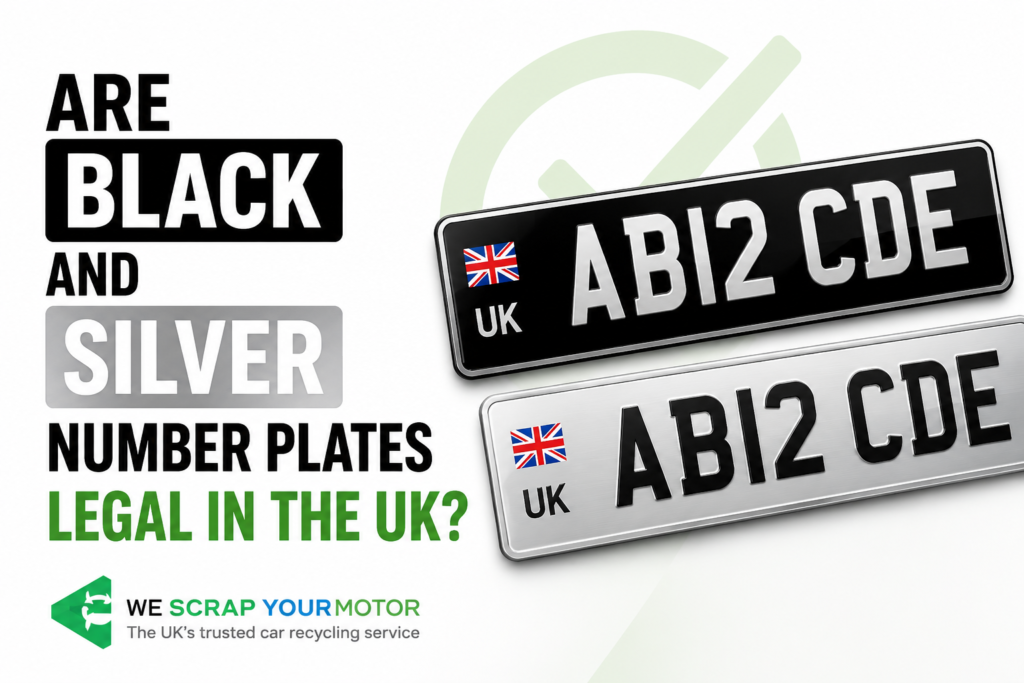
Black and silver number plates are legal in the UK only for vehicles registered before 1 January 1980 and classified as historic vehicles by the DVLA. Modern vehicles must use standard reflective number plates.
Classic vehicles carry a unique identity that many car enthusiasts want to preserve. From vintage paintwork to original interiors, every detail matters when restoring or maintaining an older motor. One of the most recognizable features of a classic British vehicle is the use of black and silver number plates.
These traditional registration plates create an authentic retro appearance that reflective modern plates cannot match. However, UK number plate laws are strict, and using the wrong style of registration plate can result in fines, MOT failures, and issues with the DVLA.
Many drivers assume older-looking plates are legal on any vehicle, but that is not the case. Whether you own a classic car, are buying a historic vehicle, or plan to scrap an older motor, understanding the law is important.
This guide explains the UK rules for black and silver number plates, which vehicles qualify, the penalties for illegal use, and what to check before selling or scrapping your vehicle.
What are Black and Silver Number Plates?
Black and silver number plates are vintage-style registration plates featuring silver, grey, or white characters displayed on a black background. These plates were commonly used in the UK before reflective number plates became mandatory.
Today, they are mostly seen on:
- Classic cars
- Historic motorcycles
- Vintage vans
- Restored British vehicles
- Collector vehicles
Many classic car owners prefer these plates because they preserve the original appearance of older vehicles. They also give historic motors a more authentic and traditional British look.
Unlike modern reflective plates, these vintage plates have a simpler design that matches vehicles built decades ago.
Are Black and Silver Number Plates Legal in the UK?
Yes, black and silver number plates are legal in the UK, but only under specific DVLA rules.
A vehicle can legally display black and silver number plates if it:
- Was registered before 1 January 1980
- Qualifies as a historic vehicle
- Meets DVLA registration requirements
Modern vehicles are not allowed to use these retro-style plates, even if the owner prefers the appearance.
The UK government introduced reflective plates because they improve visibility for drivers, police officers, and ANPR (Automatic Number Plate Recognition) systems. As a result, newer vehicles must continue using modern reflective registration plates.
Using illegal registration plates on a modern car may lead to financial penalties and MOT problems.
Which Vehicles Can Legally Use Black and Silver Number Plates?
Not every old vehicle automatically qualifies for black and silver number plates. Eligibility depends on both the registration year and historic classification.
Generally, vehicles registered before 1 January 1980 can legally use these plates if they are recognized as historic vehicles.
The DVLA also uses a rolling 40-year historic vehicle system for taxation purposes. Once a vehicle becomes old enough, owners may apply for historic tax status through the DVLA.
Examples of vehicles that commonly qualify include:
| Vehicle Type | Eligible for Black and Silver Plates? |
| 1970s Classic Cars | Yes |
| Historic Motorcycles | Yes |
| Modern Cars | No |
| Recently Modified Vehicles | Usually No |
| Vintage Commercial Vans | Yes |
Some popular qualifying vehicles include:
- Classic Minis
- Old Land Rovers
- Triumph motorcycles
- Jaguar E-Type models
- Vintage Ford Escorts
Owners should also remember that MOT inspections and taxation rules still apply in certain situations. Always check the V5C logbook and confirm your vehicle’s status with the DVLA before changing registration plates.
DVLA Rules for Black and Silver Number Plates
The DVLA has strict regulations regarding the appearance and legality of registration plates.
Font and Spacing Rules
Even legal black and silver number plates must use approved fonts and correct character spacing. Altered spacing or decorative fonts may still make the plate illegal.
Characters must remain easy to read from a distance.
Plate Supplier Regulations
Vehicle owners should only buy plates from DVLA-approved suppliers. Approved manufacturers follow UK legal standards for registration plate production.
Many cheap online sellers advertise retro plates that are intended only for display or “show use.”
Visibility and Reflectivity Requirements
Modern reflective plates were introduced to improve road visibility and support ANPR technology used by police and traffic systems.
Historic vehicles are exempt only if they legally qualify for black and silver number plates under current DVLA regulations.
Consequences of Illegal Plates
Using illegal registration plates can result in:
- Fines up to £1000
- MOT test failures
- Police warnings
- Vehicle inspections
- Registration complications
In some cases, authorities may even remove the right to use a personalised registration number.
Can Modern Cars Use black and silver number plates?
No. Modern vehicles cannot legally display black and silver number plates in the UK.
Many drivers install retro plates for cosmetic reasons, especially on modified vehicles or custom builds. Social media trends and online car communities have also increased interest in vintage-style plates.
However, appearance does not override UK law.
Even if the vehicle looks classic, the registration plate must still comply with modern DVLA regulations unless the vehicle officially qualifies as historic.
This is one of the most common number plate mistakes UK drivers make today.
What Happens If Your Vehicle Has Illegal Number Plates?
Illegal registration plates can create multiple legal and financial problems.
1. MOT Failure Risks
A vehicle with incorrect plates may fail its MOT because the registration display does not meet legal standards.
2. Financial Penalties
Drivers caught using illegal number plates may receive fines of up to £1000.
3. Insurance Complications
Some insurance companies may view illegal modifications negatively, especially after accidents or roadside checks.
4. Police Stops and Compliance Checks
Police officers regularly use ANPR cameras to identify non-compliant vehicles. Incorrect plates may lead to roadside inspections or warnings.
5. Problems When Selling or Scrapping a Vehicle
Illegal plates can also create delays when transferring ownership or scrapping a vehicle.
Before disposing of an old vehicle, it helps to understand the legal paperwork and vehicle collection process offered by We Scrap Your Motor.
Checking Number Plate Legality Before Scrapping Your Car
Vehicle registration compliance matters when selling or scrapping an older motor.
Before arranging collection or disposal, owners should:
- Remove private registrations if they want to keep them
- Check the V5C logbook details
- Ensure the vehicle uses legal plates
- Confirm historic vehicle classification
- Keep ownership documents ready
Many people forget to remove cherished or personalised registrations before scrapping a vehicle. Once the vehicle is destroyed, recovering those registrations can become difficult.
Returning the vehicle to legal condition before disposal can also help avoid paperwork issues.
How to Apply for Historic Vehicle Status in the UK
If your vehicle qualifies as historic, you may need to update its records with the DVLA before legally using black and silver number plates.
Step 1: Update the V5C Logbook
Owners should ensure the vehicle registration details are accurate and current.
Step 2: Apply for Historic Tax Class
Eligible vehicles can apply for historic vehicle tax classification through the DVLA.
Step 3: Submit Supporting Documents
The DVLA may request:
- V5C registration certificate
- Vehicle age evidence
- Historic ownership details
- Supporting forms such as V112 if required
Step 4: Wait for DVLA Processing
Processing times may vary depending on the application and supporting documents submitted.
Once approved, qualifying vehicles can legally display black and silver number plates.
Common Myths About black and silver number plates
There are many misunderstandings surrounding vintage registration plates in the UK.
- Any old-looking car can use them.
False. Only qualifying historic vehicles can legally display these plates.
- They are legal if bought online.
False. Many online sellers clearly label them as “show plates only.”
- Classic-style plates always pass MOT tests.
False. Incorrect spacing or non-compliant formatting can still fail an MOT inspection.
- Private registrations automatically qualify.
False. The vehicle itself must meet historic eligibility requirements.
Tips for Classic Car Owners
Classic vehicle owners can avoid legal problems by following a few simple rules.
1. Buy Road-Legal Plates
Always use trusted suppliers that follow DVLA standards.
2. Keep Vehicle Records Updated
Ensure the V5C logbook and tax class remain accurate.
3. Protect Resale Value
Maintaining legal compliance helps preserve the value of historic vehicles.
4. Avoid Counterfeit Suppliers
Cheap replica plates may not meet legal requirements.
5. Preserve Authenticity Legally
You can still maintain a classic appearance without violating UK registration laws.
FAQs About black and silver number plates
Q1. Are black and silver number plates legal on any car in the UK?
No. Only qualifying historic vehicles registered before 1 January 1980 can legally use them.
Q2. What year car qualifies for vintage number plates?
Vehicles registered before 1 January 1980 may qualify if they meet DVLA historic vehicle requirements.
Q3. Can illegal number plates fail an MOT?
Yes. Incorrect registration plates may result in an MOT failure.
Q4. Are retro number plates legal in the UK?
Only if the vehicle officially qualifies under DVLA regulations.
Q5. What is the fine for illegal registration plates?
Drivers may face fines of up to £1000 for using illegal number plates.
Understanding the Legal Use of black and silver number plates in the UK
Black and silver number plates remain one of the most iconic features of classic British vehicles. They help preserve the authentic appearance of historic cars and motorcycles while celebrating the heritage of older motors.
However, UK law is very specific about who can legally use black and silver number plates. Only qualifying historic vehicles registered before 1 January 1980 are allowed to display them. Modern vehicles must continue using reflective registration plates that comply with DVLA standards.
Before installing retro plates, always confirm your vehicle’s eligibility through the DVLA. Staying compliant can help you avoid MOT failures, fines, insurance complications, and problems when selling or scrapping your vehicle in the future.