
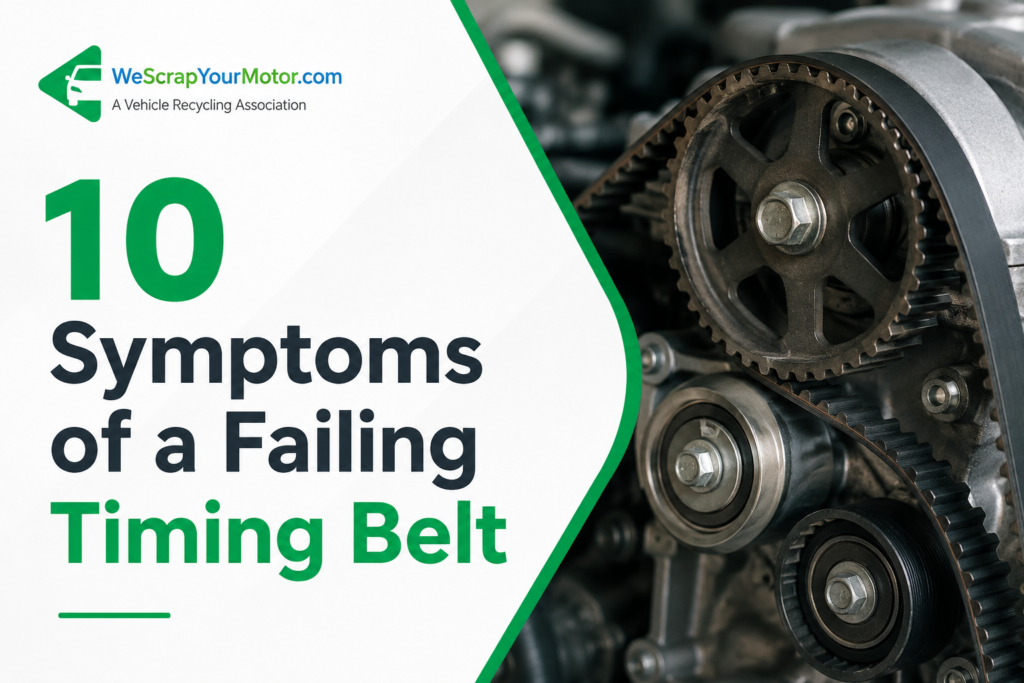
Your timing belt plays one of the most important roles in your vehicle’s engine. It keeps the camshaft and crankshaft moving in perfect synchronization so your engine runs smoothly. But when the timing belt starts to fail, it can lead to serious engine damage and expensive repairs.
Understanding the symptoms of a failing timing belt early can save you thousands of pounds and help you decide whether repairing or scrapping your car is the better option. Many UK drivers ignore the early warning signs until the engine completely breaks down.
In this guide, we will explain the most common timing belt warning signs, repair risks, and when it may make more sense to scrap your vehicle instead of fixing it.
What Does a Timing Belt Do?
A timing belt is a reinforced rubber belt that controls the timing of your engine’s internal components. It ensures the engine valves open and close at the correct time during combustion.
If the belt slips, stretches, or snaps, the engine timing becomes incorrect. In many vehicles, this can cause pistons and valves to collide, leading to catastrophic engine damage.
That is why recognizing the symptoms of a failing timing belt is extremely important.
1. Ticking Noise Coming From the Engine
One of the earliest symptoms of a failing timing belt is a ticking sound coming from the engine area.
A worn timing belt can create unusual noises because the belt teeth are wearing down or the belt tension is incorrect. Some drivers mistake this sound for low oil pressure or valve train issues.
If you hear a constant ticking noise while driving or idling, it is best to inspect the timing belt immediately.
2. Engine Misfires While Driving
Engine misfires are another common sign of timing belt trouble.
The timing belt controls the engine valves. When the belt becomes worn or slips out of alignment, the valves may open and close at the wrong time. This disrupts combustion and causes the engine to misfire.
Among the most dangerous symptoms of a failing timing belt, engine misfires should never be ignored because they can quickly lead to severe engine damage.
3. Rough Idling and Vibrations
Does your vehicle shake or vibrate while idling?
A damaged timing belt can throw off the engine timing, causing rough idling and excessive vibrations. You may notice the car feels unstable even while parked.
These rough vibrations are common symptoms of a failing timing belt and often become worse over time.
4. Difficulty Starting the Car
If your car struggles to start or refuses to start completely, the timing belt may be responsible.
A timing belt that has slipped or lost tension prevents the engine from maintaining proper timing. Without correct timing, the engine cannot ignite fuel properly.
Many UK drivers discover the symptoms of a failing timing belt only after their vehicle suddenly fails to start on a busy morning.
5. Engine Warning Light Appears
Modern vehicles often detect engine timing issues through onboard sensors.
If the check engine light appears alongside rough performance, misfires, or strange noises, your timing belt could be failing.
Although many problems can trigger the warning light, combining it with other symptoms of a failing timing belt increases the likelihood of a timing-related issue.
6. Oil Leaking Near the Timing Cover
Oil leaks around the front of the engine may indicate a worn timing cover gasket or damaged timing belt components.
Oil contamination weakens the timing belt material over time, causing faster wear and increasing the risk of belt failure.
This is one of the less obvious symptoms of a failing timing belt, but it can lead to major engine issues if ignored.
7. Loss of Engine Power
A slipping timing belt can affect engine timing accuracy, reducing power and acceleration.
Your car may feel sluggish when accelerating or struggle to maintain speed on motorways. In some cases, fuel efficiency also decreases.
Power loss is among the most frustrating symptoms of a failing timing belt because it affects daily driving performance.
8. High-Pitched Squealing Noise
A loose or worn timing belt may produce a squealing sound from the engine.
This often happens when the belt loses tension or begins deteriorating. While accessory belts can also squeal, timing belt noises should be taken seriously because failure can destroy the engine.
If the squealing becomes louder, it may indicate advanced symptoms of a failing timing belt.
9. Visible Wear or Cracks on the Belt
If a mechanic inspects your timing belt and notices cracks, fraying, glazing, or missing teeth, replacement is urgently needed.
Physical wear is one of the clearest symptoms of a failing timing belt and usually means the belt is close to failure.
Routine inspections are important because many timing belts fail without obvious driving symptoms.
10. Complete Engine Failure
The worst-case scenario is a snapped timing belt.
When the timing belt breaks while driving, the engine immediately stops working. In interference engines, pistons and valves can collide, causing bent valves, damaged pistons, and sometimes complete engine destruction.
Complete breakdown is the final stage of the symptoms of a failing timing belt, and repairs can cost more than the value of the car itself.
When Should You Replace a Timing Belt?
Most manufacturers recommend replacing the timing belt between 60,000 and 100,000 miles, depending on the vehicle model.
Ignoring replacement schedules increases the risk of sudden failure. If you purchased a used vehicle and do not know the timing belt history, having it inspected is highly recommended.
Preventive replacement is usually much cheaper than repairing a damaged engine.
Timing Belt Replacement Cost in the UK
Timing belt replacement costs in the UK can vary depending on the vehicle make and model.
Typical replacement costs include:
- Small cars: £250 to £450
- Mid-size vehicles: £400 to £700
- Luxury or performance cars: £800+
If the timing belt has already failed and damaged the engine, repair costs can easily exceed £2,000.
For older vehicles with low market value, many owners decide it is more economical to scrap the car instead of paying for expensive repairs.
Should You Repair or Scrap Your Car?
If your vehicle has severe engine damage from a failed timing belt, repairing it may not always be financially sensible.
You should consider scrapping your car if:
- Repair costs exceed the vehicle’s value
- The car already has high mileage
- Multiple mechanical problems exist
- MOT failures are becoming frequent
- The engine damage is extensive
Instead of spending thousands on repairs, many UK drivers choose to sell their damaged cars to scrap specialists.
You can also check services like We Scrap Your Motor to learn more about scrapping unwanted or damaged vehicles in the UK.
How to Prevent Timing Belt Failure
Preventive maintenance is the best way to avoid timing belt problems.
Here are some useful tips:
- Follow manufacturer replacement intervals
- Check for oil leaks regularly
- Listen for unusual engine noises
- Avoid ignoring engine warning lights
- Have the belt inspected during servicing
Catching problems early can prevent catastrophic engine damage and save money.
What UK Drivers Should Know About Timing Belt Failure
Understanding the symptoms of a failing timing belt early can save you from expensive repairs, sudden breakdowns, and major engine damage. Small warning signs like ticking noises, rough idling, power loss, or engine misfires should never be ignored because timing belt problems often get worse very quickly.
For many UK drivers, replacing the timing belt in time can keep the vehicle running smoothly for years. But if the engine has already suffered severe damage and repair costs are too high, scrapping the car may be the more practical and cost-effective option.Whether you decide to repair, replace, or scrap your vehicle, acting quickly after noticing the symptoms of a failing timing belt can help you avoid bigger mechanical problems and unnecessary expenses.