
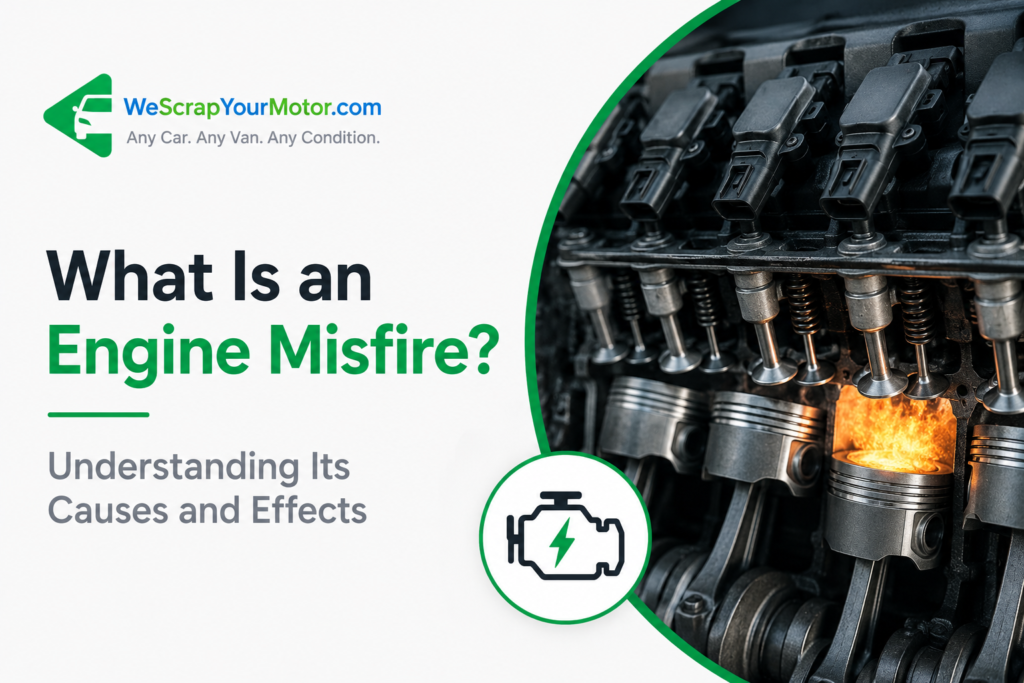
If your car suddenly starts shaking, loses power, or makes unusual noises, you may be asking yourself, “what is an engine misfire?” A misfire happens when one or more cylinders inside the engine fail to burn fuel properly. This interrupts the combustion process and affects how the engine runs.
Understanding what is an engine misfire is important because ignoring it can lead to expensive repairs, reduced fuel efficiency, and even complete engine failure. Many UK drivers continue driving despite clear warning signs, which often turns a small issue into a major problem.
In this guide, you will learn what is an engine misfire, its common causes, warning signs, effects on your vehicle, repair options, and when it may be smarter to scrap your car instead of repairing it.
What Is an Engine Misfire?
To understand what is an engine misfire, you first need to know how a car engine works. Inside the engine, cylinders burn a mixture of fuel and air using spark plugs. This process creates power that moves your vehicle.
A misfire occurs when this combustion process fails in one or more cylinders. The engine may still run, but it will perform poorly and feel rough while driving.
Simply put, what is an engine misfire? It is an engine problem caused by incomplete or failed combustion inside the cylinders.
Engine misfires can happen occasionally or continuously depending on the severity of the issue. In some cases, the car may only misfire during acceleration, while in others, it may shake constantly even at idle.
Common Symptoms of an Engine Misfire
Recognising the symptoms early can help prevent serious engine damage. Here are the most common signs:
1. Rough Idling
One of the first signs of a misfire is a rough or shaky idle. The engine may vibrate more than usual while the car is stationary.
2. Loss of Power
A misfiring engine struggles to produce enough power. You may notice slow acceleration or difficulty driving uphill.
3. Check Engine Light
The check engine light often appears when the engine control unit detects a misfire.
4. Engine Shaking
Many drivers searching for what is an engine misfire report strong vibrations while driving or stopping at traffic lights.
5. Poor Fuel Economy
When fuel does not burn correctly, your engine uses more petrol or diesel than normal.
6. Strange Sounds
Popping, sputtering, or coughing sounds from the engine are common symptoms of engine misfire problems.
Main Causes of Engine Misfires
There are several reasons why a car engine may misfire. Understanding these causes helps explain what is an engine misfire and how serious it can become.
Faulty Spark Plugs
Spark plugs ignite the fuel-air mixture inside the cylinders. Worn or damaged plugs are one of the most common engine misfire causes.
Ignition Coil Failure
Ignition coils provide electrical power to the spark plugs. A failing ignition coil can stop the spark plug from working properly.
Fuel Injector Problems
Fuel injectors deliver fuel into the cylinders. If they become clogged or damaged, the engine may not receive enough fuel.
Vacuum Leaks
Vacuum leaks allow extra air into the engine, disturbing the fuel-air balance and causing combustion issues.
Low Compression
Damaged pistons, valves, or piston rings can reduce compression inside the engine cylinders.
Faulty Sensors
Modern vehicles rely on sensors to manage engine performance. A bad sensor can affect timing and fuel delivery.
What Happens If You Ignore an Engine Misfire?
Many drivers continue driving after noticing symptoms because the car still moves. However, ignoring the issue can create severe damage.
Catalytic Converter Damage
Unburned fuel can enter the exhaust system and damage the catalytic converter, which is expensive to replace.
Reduced Engine Life
Driving with a misfire places stress on internal engine components and increases wear.
Poor Performance
If you are wondering what is an engine misfire and why it matters, poor vehicle performance is one major reason. Your car becomes unreliable and unsafe.
Higher Repair Costs
Small issues like faulty spark plugs are affordable to fix. But ignoring them can lead to engine rebuilds or replacements.
MOT Failure
In the UK, severe engine problems and high emissions can cause your vehicle to fail its MOT test.
How Mechanics Diagnose Engine Misfires
Professional mechanics use several methods to identify the problem.
OBD Scanner
Modern cars store fault codes when problems occur. Mechanics use diagnostic scanners to locate the issue quickly.
Spark Plug Inspection
Damaged or worn spark plugs are checked for signs of failure.
Compression Testing
Compression tests help identify internal engine damage.
Fuel System Inspection
Fuel injectors and fuel pressure systems are examined for faults.
Sensor Testing
Sensors connected to the engine management system are tested for errors.
Can You Drive With an Engine Misfire?
Technically, yes, but it is not recommended.
If you continue driving while ignoring what is an engine misfire, you risk causing permanent engine damage. Short trips to a repair garage may be possible, but long-distance driving should be avoided.
A severe misfire can suddenly reduce engine power, creating dangerous situations on motorways or busy roads.
How Much Does Engine Misfire Repair Cost in the UK?
Repair costs depend on the actual cause of the problem.
| Repair Type | Estimated UK Cost |
| Spark Plug Replacement | £50 – £150 |
| Ignition Coil Replacement | £100 – £300 |
| Fuel Injector Repair | £150 – £500 |
| Sensor Replacement | £100 – £400 |
| Engine Compression Repair | £800 – £2,500+ |
For older vehicles, repair costs may exceed the actual value of the car.
When Should You Scrap a Car With Engine Problems?
Sometimes repairing a vehicle no longer makes financial sense. This is especially true for older cars with high mileage or multiple mechanical issues.
If the engine repair costs are extremely high, many UK drivers choose to scrap their vehicles instead.
For example, if your car has major engine damage along with rust, gearbox issues, or MOT failures, scrapping it can save money and stress. Many people searching what is an engine misfire eventually realise the repair costs are too expensive compared to the car’s value.
You can also read our guide on when it is the right time to scrap a vehicle through We Scrap Your Motor for more helpful advice about damaged cars in the UK.
How to Prevent Engine Misfires
Prevention is always cheaper than repair. Here are some simple maintenance tips:
- Replace spark plugs on schedule
- Use quality fuel
- Service your vehicle regularly
- Fix warning lights immediately
- Replace faulty ignition components early
- Keep fuel injectors clean
- Check for vacuum leaks during servicing
Regular maintenance greatly reduces the chances of engine performance issues.
Final Thoughts on Engine Misfires
By now, you should clearly understand what is an engine misfire and why it should never be ignored. A misfire happens when fuel inside the engine cylinders does not burn properly, leading to rough driving, poor fuel economy, and potential engine damage.
The good news is that many misfire problems are affordable to fix when detected early. However, severe engine damage can become extremely expensive, especially for older vehicles.
If repair costs are too high, scrapping your vehicle may be the smarter financial option. Always compare repair expenses with the actual value of your car before making a decision.