
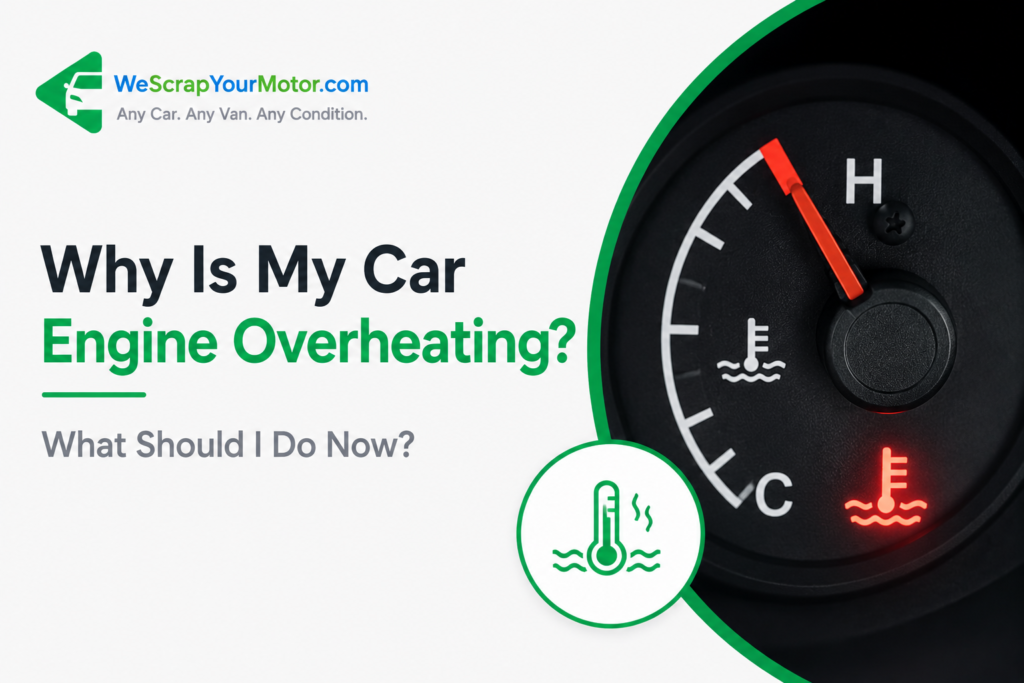
If you are dealing with car engine overheating, it is important to act quickly before the problem turns into serious engine damage. Many UK drivers ignore early warning signs like steam from the bonnet, rising temperature gauges, or coolant leaks until the engine completely fails. In some cases, repairing overheating damage can cost thousands of pounds, especially if the issue leads to a blown head gasket or cracked engine block.
Understanding the causes of car engine overheating can help you decide whether the vehicle is worth repairing or if it makes more financial sense to scrap it. In this guide, we will explain the common reasons behind overheating engines, what you should do immediately, and when scrapping your car may be the best option.
What Does It Mean When Your Car Engine Overheats?
Your car engine normally operates within a safe temperature range. The cooling system works to remove excess heat from the engine while you drive. However, when something in the cooling system fails, the engine temperature rises rapidly.
Car engine overheating happens when the engine becomes too hot for safe operation. This can damage internal components and reduce engine performance. If ignored, overheating may completely destroy the engine.
Some common signs include:
- Steam coming from the bonnet
- Temperature warning light turning on
- Burning smells while driving
- Loss of engine power
- Coolant leaking underneath the vehicle
Sometimes overheating happens slowly over time, while other cases can occur suddenly during driving. Either way, continuing to drive an overheating vehicle is extremely risky.
Common Causes of Car Engine Overheating
There are several reasons why car engine overheating happens. Some issues are minor and affordable to repair, while others may require expensive engine work.
Low Coolant Levels
Coolant plays a major role in controlling engine temperature. If coolant levels drop too low, the engine cannot cool itself properly.
Low coolant levels are usually caused by:
- Coolant leaks
- Damaged hoses
- Cracked radiator pipes
- Faulty coolant reservoir
Many older vehicles in the UK develop coolant leaks due to age and wear.
Faulty Radiator Problems
The radiator removes heat from the coolant before it circulates back through the engine. If the radiator becomes blocked or damaged, heat cannot escape properly.
Signs of radiator problems include:
- Rust buildup
- Coolant leaks
- Broken radiator fan
- Engine overheating while idling
A damaged radiator is one of the most common causes of car engine overheating in older vehicles.
Broken Thermostat
The thermostat controls coolant flow through the engine. When it becomes stuck closed, coolant cannot circulate correctly.
This leads to rapid temperature increases and severe overheating. Faulty thermostats are relatively inexpensive to replace, but delaying repairs can lead to major engine damage.
Water Pump Failure
The water pump pushes coolant through the cooling system. If the water pump fails, coolant stops circulating properly.
Symptoms include:
- Coolant leaking near the pump
- Grinding noises
- Steam from the engine bay
- Temperature gauge rising quickly
Ignoring water pump problems can eventually result in car engine overheating and engine failure.
Low Engine Oil
Engine oil reduces friction between moving engine parts. Low oil levels increase heat and friction inside the engine.
Without enough lubrication, engine parts wear down faster and create excessive heat buildup.
Regular oil changes help reduce overheating risks and improve engine lifespan.
Warning Signs You Should Never Ignore
Most overheating problems give warning signs before the engine completely fails. Recognising these symptoms early can save you from costly repairs.
Here are some common overheating engine symptoms:
- Steam coming from the bonnet
- Sweet smell inside the car
- Coolant leaking under the vehicle
- Temperature gauge in the red zone
- Strange ticking noises from the engine
- Reduced acceleration and power
If you notice any of these issues, stop driving immediately. Ignoring car engine overheating can lead to permanent engine damage within minutes.
What Should You Do Immediately If Your Engine Overheats?
When your engine overheats, taking the right steps quickly can reduce damage and improve safety.
Pull Over Safely
As soon as you notice overheating signs, pull over safely and switch off the engine. Continuing to drive with a car engine overheating can completely destroy the engine.
Avoid heavy acceleration or driving long distances while the temperature is high.
Let the Engine Cool Down
Wait at least 20 to 30 minutes before inspecting anything under the bonnet.
Never open the radiator cap while the engine is still hot. Pressurised coolant can spray out and cause serious burns.
Check Coolant Levels
After the engine cools, inspect the coolant reservoir carefully.
Look for:
- Low coolant levels
- Visible leaks
- Broken hoses
- Damaged radiator components
If coolant levels are low, topping it up may temporarily help, but the root cause still needs repair.
Call for Professional Assistance
If the overheating problem continues, contact a mechanic or vehicle recovery service.
Driving repeatedly with car engine overheating may damage the head gasket, cylinder head, or engine block beyond repair.
Can Driving an Overheating Car Damage the Engine?
Yes, driving with an overheating engine can cause serious and expensive damage.
Modern engines operate under high pressure and heat. When temperatures rise too far, metal components begin to warp and crack.
Some of the most common overheating-related damages include:
- Blown head gasket
- Warped cylinder head
- Cracked engine block
- Seized engine
- Damaged pistons
Repair costs in the UK can become extremely expensive.
Average repair costs may include:
| Repair Type | Estimated UK Cost |
| Thermostat replacement | £100–£250 |
| Radiator replacement | £200–£600 |
| Head gasket repair | £800–£2,000 |
| Engine replacement | £2,500+ |
If car engine overheating has already caused major engine failure, many drivers decide that scrapping the vehicle makes more financial sense.
Is It Worth Repairing an Overheating Engine?
The answer depends on the vehicle’s condition, value, and repair costs.
You should consider:
- Age of the car
- Current market value
- Mileage
- Frequency of breakdowns
- Estimated repair costs
For newer vehicles, repairing overheating problems may still be worthwhile. However, older high-mileage vehicles often cost more to repair than they are worth.
Here is a simple comparison:
| Situation | Repair It | Scrap It |
| Minor coolant leak | ✔ | |
| Broken thermostat | ✔ | |
| Blown head gasket | Maybe | ✔ |
| Cracked engine block | ✔ | |
| Old car with repeated overheating | ✔ |
When car engine overheating leads to severe engine damage, scrapping the vehicle may save you from ongoing repair bills and reliability problems.
When Should You Scrap an Overheating Car?
Sometimes repairing an overheating car simply does not make financial sense.
You should consider scrapping the vehicle if:
- The engine keeps overheating repeatedly
- Repair costs exceed the car’s value
- The engine has seized
- The car failed its MOT due to engine damage
- Smoke continues coming from the engine bay
- The vehicle has very high mileage
Many drivers across the UK choose to scrap your car in the UK instead of paying thousands for engine repairs.
Scrapping an overheating vehicle can provide quick cash while removing the stress of future breakdowns.
How We Scrap Your Motor Can Help
At We Scrap Your Motor, we help UK drivers dispose of damaged and non-running vehicles quickly and legally.
Even if your vehicle has severe car engine overheating damage, it may still hold scrap value.
Our services include:
- Free vehicle collection
- Instant quotes
- Fast payments
- Environmentally responsible recycling
- Collection of damaged or non-running cars
If your engine damage is beyond repair, scrapping your vehicle may be the easiest and most cost-effective solution.
You can also learn more about other engine-related problems in our guide on what is an engine misfire.
Conclusion
Dealing with car engine overheating can be stressful, but acting quickly can prevent serious engine damage and expensive repair costs. Common causes include coolant leaks, faulty radiators, broken thermostats, and water pump failures. Ignoring overheating warning signs may lead to blown head gaskets, cracked engine blocks, or complete engine failure.
While some overheating problems are affordable to repair, older vehicles with severe engine damage are often not worth fixing. In many situations, scrapping the car becomes the smarter financial option.
If your vehicle has suffered serious car engine overheating damage, contact We Scrap Your Motor today for a fast quote and free vehicle collection anywhere in the UK.
Frequently Asked Questions
Q1: Can I drive my car after it overheats?
It is not recommended. Driving an overheating vehicle can cause permanent engine damage within minutes.
Q2: How much does it cost to fix an overheating engine in the UK?
Costs vary depending on the issue. Minor repairs may cost under £300, while major engine repairs can exceed £2,000.
Q3: Can low coolant cause engine overheating?
Yes. Low coolant levels reduce the cooling system’s ability to remove heat from the engine.
Q4: Is it worth fixing a blown head gasket?
It depends on the vehicle’s value and condition. Older cars with high mileage are often cheaper to scrap than repair.