
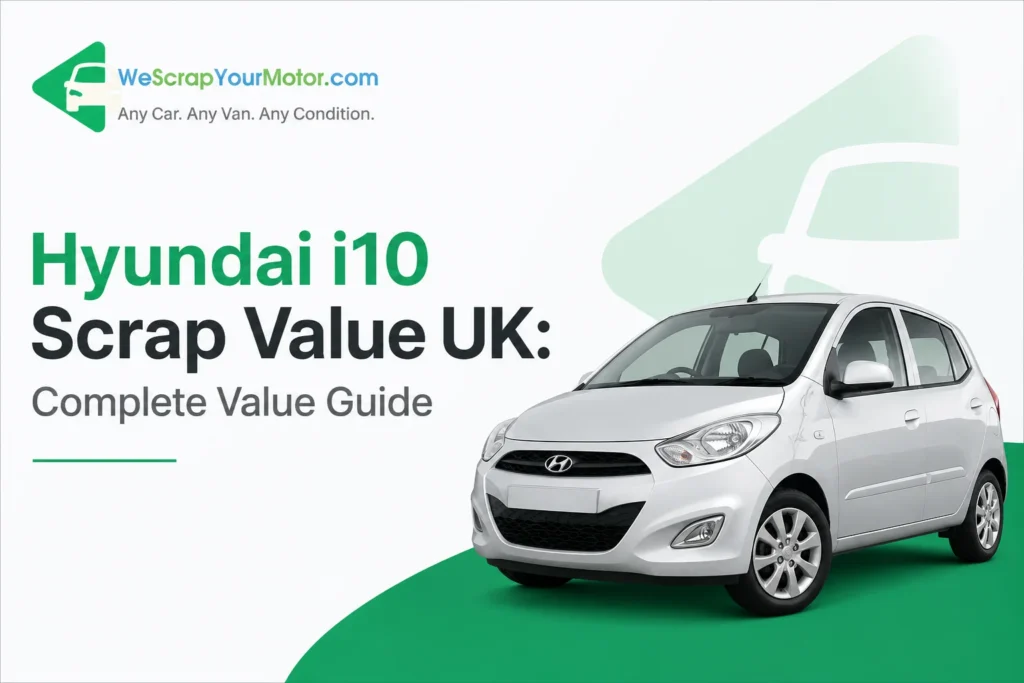
A Hyundai i10 is known for being reliable, economical, and inexpensive to run. That’s exactly why many of them stay on UK roads for well over a decade. But even the most dependable city car eventually reaches a point where repairing it no longer makes financial sense.
If you’re researching the Hyundai i10 scrap value, chances are your car has developed an expensive fault, failed its MOT, or simply isn’t worth keeping anymore. Before making a decision, it’s worth understanding what your vehicle could be worth and why two seemingly identical Hyundai i10s can receive completely different scrap offers.
Unlike selling a used car, scrapping isn’t based on paintwork, shiny alloys, or how well you’ve cleaned the interior. Professional vehicle recyclers look at your car from a completely different perspective, focusing on what can be recovered, recycled, and reused.
This guide explains how those decisions are made and what you can do to maximise the value of your Hyundai i10 before arranging the collection.
The Biggest Misconception About Scrapping a Hyundai i10
Many owners assume that because the Hyundai i10 is a small city car, it won’t be worth much once it reaches the end of its life.
That’s not always true.
Although it’s lighter than larger SUVs or family saloons, the Hyundai i10 remains one of the UK’s most common small cars. That popularity creates ongoing demand for certain replacement parts, while the vehicle itself still contains valuable recyclable materials.
This means an older i10 with mechanical problems can still be worth considerably more than many owners expect.
The lesson is simple: never judge your car’s scrap value purely by its size.
Why Two Hyundai i10s Built in the Same Year Can Receive Different Offers
Imagine two 2016 Hyundai i10s parked next to each other.
From the outside, they look almost identical.
However, one owner receives a noticeably higher quotation than the other.
Why?
Because recyclers look beyond the registration year.
They’ll consider details such as:
- Whether the engine is complete
- If the catalytic converter is still fitted
- The trim specification
- Overall vehicle weight
- Missing components
- Accident history
- Condition of reusable parts
These differences can have a greater impact on value than the vehicle’s age alone.
Small Cars Still Contain Valuable Materials
A common myth is that only large vehicles generate worthwhile scrap returns.
In reality, every modern vehicle contains materials that are recovered during recycling.
Your Hyundai i10 includes:
- High-grade steel
- Aluminium components
- Copper wiring
- Plastic materials
- Glass
- Rubber
- Precious metals inside the catalytic converter
These materials are separated, processed, and reused in manufacturing, which is why even an old non-running car still retains value.
What Scrap Buyers Notice Within the First Few Minutes
When an authorised vehicle recycler inspects a Hyundai i10, they aren’t looking for showroom condition.
Instead, they quickly assess the features that influence its recovery value.
Some of the first things they check include:
Is the Vehicle Complete?
Cars with their original engine, gearbox, catalytic converter, wheels, and electronic components generally receive stronger offers.
Has the Vehicle Been Modified?
Extensive modifications may reduce demand for reusable components if original factory parts have been replaced.
Is There Significant Structural Damage?
Minor cosmetic dents rarely matter.
However, severe structural damage may affect which parts can realistically be recovered.
Are Valuable Components Still Present?
Modern vehicles contain numerous components that can sometimes be reused.
Examples include:
- Starter motor
- Alternator
- Air conditioning compressor
- ECU
- Suspension parts
- Interior electronics
- Alloy wheels
Why Some Hyundai i10 Owners Scrap Their Cars Earlier Than Expected
Not every vehicle is scrapped because it’s old.
In fact, many relatively modern Hyundai i10s enter the recycling process each year.
Common reasons include:
Unexpected Engine Failure
Replacing an engine can be one of the most expensive repairs on an older vehicle.
Accident Damage
Insurance companies sometimes decide that repairing a small city car isn’t economically viable, even when the damage appears repairable.
Rising Repair Costs
One repair often leads to another.
When yearly maintenance begins exceeding the car’s remaining value, many owners decide it’s time to move on.
MOT Failure
Older Hyundai i10s frequently fail MOT tests because of:
- Corrosion
- Suspension wear
- Brake components
- Emissions
- Steering issues
Repairing multiple faults at once can quickly become uneconomical.
Does a Higher Trim Level Make Any Difference?
While engine condition and weight remain the biggest factors, higher-specification Hyundai i10 models sometimes contain additional components that increase their overall recovery value.
These may include:
- Alloy wheels
- Heated seats
- Touchscreen infotainment systems
- Parking sensors
- Rear cameras
- Climate control units
Although these features won’t dramatically increase the overall scrap price, they can make one vehicle more attractive than another of the same age.
When Waiting Can Actually Cost You Money
Many owners postpone scrapping their Hyundai i10 because they hope they’ll eventually repair it.
Sometimes that decision ends up reducing the vehicle’s value.
A car left unused for several months may develop:
- Flat tyres
- Water leaks
- Interior mould
- Battery deterioration
- Corrosion
- Seized brakes
While these issues don’t always affect scrap value directly, they can reduce the number of reusable components available during dismantling.
If you’ve already decided not to repair the vehicle, delaying collection may offer little financial benefit.
One Thing Most Online Scrap Calculators Don’t Tell You
Online valuation tools can provide a useful starting point, but they don’t inspect your vehicle.
Most calculators rely on basic information such as:
- Registration
- Make
- Model
- Fuel type
- Age
An experienced buyer will usually go much further.
They’ll also consider:
- Overall completeness
- Current market demand
- Reusable parts
- Local collection costs
- Metal prices
- Vehicle specification
That’s why two online calculators can produce different estimates, and why a personalised quotation is usually more accurate.
Looking for a Reliable Hyundai i10 Scrap Valuation?
If you’re ready to understand what your vehicle is actually worth, requesting a professional valuation is the best place to start.
At We Scrap Your Motor, we assess every vehicle individually rather than relying solely on automated estimates. This helps ensure your quotation reflects your Hyundai i10’s actual condition and current market demand.
Does the Generation of Your Hyundai i10 Affect Its Scrap Value?
One question many owners overlook is whether the generation of their Hyundai i10 has any impact on its recycling value.
The answer is yes, but probably not for the reason you think.
Most people assume newer cars are always worth more because they’re newer. While that’s often true, recyclers also consider how desirable the vehicle’s components are in today’s market.
For example:
- Older Hyundai i10 models may have fewer electronic systems but still contain reliable mechanical parts that remain in demand.
- Newer generations often include more advanced safety systems, larger infotainment units, improved alloy components, and updated engines that can increase the vehicle’s recovery potential.
Rather than focusing solely on the registration year, buyers assess the overall value the vehicle can provide once it’s dismantled.
Why a Well-Maintained Hyundai i10 Can Still End Up Being Scrapped
It may seem surprising, but many Hyundai i10s that are serviced regularly still end up at authorised recycling centres.
This usually happens because of one expensive repair rather than years of neglect.
Some common examples include:
- Engine replacement after overheating.
- Automatic gearbox failure.
- Timing chain or internal engine damage.
- Severe corrosion identified during an MOT.
- Accident damage exceeding the vehicle’s market value.
A car can be mechanically well maintained and still become uneconomical to repair if a single major component fails.
The Hidden Costs That Make Scrapping the Better Option
When deciding whether to repair or recycle your Hyundai i10, it’s important to look beyond the repair invoice.
Owners often forget about additional expenses such as:
- Road tax
- Insurance
- MOT retest fees
- Replacement tyres
- Routine servicing
- Fuel costs for an unreliable vehicle
When these ongoing costs are combined with a major repair bill, replacing the vehicle may become the more sensible financial decision.
What Happens to Your Hyundai i10 After Collection?
Many people imagine that every scrap car is immediately crushed.
In reality, that’s rarely the first step.
Authorised recyclers carefully inspect each vehicle to identify parts that can be recovered before the remaining shell is recycled.
Depending on the vehicle’s condition, components that may be removed include:
- Engine accessories
- Gearbox
- Suspension parts
- Starter motor
- Alternator
- Alloy wheels
- Interior switches
- Air conditioning components
- Electronic control units
Only after reusable items have been removed does the recycling process continue.
This approach helps reduce waste while extending the lifespan of serviceable vehicle parts.
Why Local Demand Can Influence Your Offer
The value of a Hyundai i10 isn’t determined by the vehicle alone.
Local market demand also plays a role.
For example, if replacement Hyundai i10 parts are in higher demand within a particular region, buyers may place greater value on reusable components.
Likewise, collection distance can influence operational costs, which may affect the quotation you receive.
This is one reason why comparing offers from more than one authorised recycler is often worthwhile.
What If Your Hyundai i10 Has Been Sitting Unused?
A car that’s been parked for several months or even years can still retain scrap value.
However, prolonged storage may lead to additional deterioration.
Common issues include:
- Corroded brake discs
- Flat tyres
- Seized brakes
- Battery failure
- Water ingress
- Interior damage caused by moisture
Although these problems don’t automatically make the vehicle worthless, arranging collection sooner rather than later can sometimes help preserve its overall recovery value.
A Simple Way to Estimate Whether Repairing Is Worthwhile
If you’re unsure whether to repair or scrap your Hyundai i10, ask yourself three questions:
Is the repair likely to cost more than the car is worth?
If the answer is yes, repairing may not be financially sensible.
Will another expensive repair be needed soon?
Replacing one major component doesn’t guarantee another won’t fail shortly afterwards.
Would that money be better spent on your next vehicle?
Sometimes investing in a replacement vehicle provides better long-term value than continuing to repair an ageing one.
Looking at the bigger financial picture often makes the decision much clearer.
How to Give Yourself the Best Chance of Receiving a Competitive Offer
Although market conditions can’t be controlled, there are a few things every owner can do before requesting a quotation.
- Keep the vehicle as complete as possible.
- Be honest about its condition.
- Have the registration details available.
- Mention any missing components in advance.
- Compare more than one authorised buyer before making a decision.
These simple steps help ensure you receive a fair and accurate valuation.
Need to Scrap Your Car in Plymouth?
If you’re based in Devon or the surrounding area, our Scrap Your Car Plymouth service provides a straightforward way to dispose of unwanted vehicles. We offer competitive quotations, convenient collection, and responsible recycling through authorised vehicle treatment facilities.
Continue Reading: Toyota Aygo Scrap Value
If you’re also comparing other compact city cars, our guide on Toyota Aygo Scrap Value explains what affects its value and how it compares with similar small hatchbacks in the UK.
Frequently Asked Questions
Does a Hyundai i10 with high mileage still have scrap value?
Yes. Mileage has much less influence on scrap value than it does when selling a used car. Recyclers are more interested in the vehicle’s recyclable materials, reusable parts, and overall condition.
Can I scrap my Hyundai i10 if the engine has seized?
Yes. Even if the engine is beyond repair, the vehicle can still contain valuable metals and components that contribute to its overall value.
Will replacing the battery increase my scrap price?
In most cases, no. Buying a new battery specifically to increase the scrap value is unlikely to be cost-effective.
Is an older Hyundai i10 always worth less than a newer one?
Not necessarily. The condition, completeness, and demand for reusable parts can sometimes make an older vehicle more valuable than a newer but heavily damaged one.
Should I clean the car before it’s collected?
Cleaning the vehicle isn’t essential, but removing personal belongings and ensuring easy access can help make the collection process smoother.
Before You Accept Any Scrap Offer, Read This Checklist
Once you’ve decided to scrap your Hyundai i10, it’s tempting to accept the first quotation you receive. However, spending just a few extra minutes checking a few details can sometimes make a noticeable difference.
Use this checklist before confirming any collection.
Confirm Your Vehicle Details
Providing accurate information helps prevent your quotation from changing later.
Check that you’ve supplied:
- Registration number
- Correct model
- Fuel type
- Transmission
- Whether the car starts
- Any accident damage
- Missing parts
Remove Everything That Belongs to You
Because the Hyundai i10 is a compact hatchback, it’s easy to forget items stored in smaller compartments.
Don’t forget to check:
- Glove compartment
- Door pockets
- Under the front seats
- Centre console
- Boot floor
- Spare wheel compartment
- Sun visor pockets
Many owners only remember these items after the vehicle has already been collected.
Keep Original Components in Place
Some people remove factory-fitted parts before arranging the collection.
Although selling individual components might sound like a good idea, it doesn’t always result in a higher overall return.
Original items such as alloy wheels, catalytic converters, mirrors, and electronic modules often contribute to a stronger complete-vehicle valuation.
Four Myths About Hyundai i10 Scrap Value
There are plenty of misconceptions about scrapping small cars. Let’s separate fact from fiction.
Myth 1: “A Small Car Isn’t Worth Scrapping”
Reality: While a Hyundai i10 won’t weigh as much as a large SUV, it still contains recyclable metals and reusable components that give it value.
Myth 2: “My Car Failed Its MOT, So It’s Worthless”
Reality: An MOT failure simply means the vehicle isn’t currently roadworthy. It doesn’t remove the value of its recyclable materials or usable parts.
Myth 3: “Every Scrap Company Pays the Same”
Reality: Quotations often vary because companies have different operating costs, dismantling processes, and demand for specific vehicle parts.
Myth 4: “I Should Spend Money Repairing It Before Scrapping”
Reality: In many cases, expensive repairs won’t increase the vehicle’s scrap value enough to recover the money spent.
Behind the Scenes: How Recyclers View a Hyundai i10
Owners usually see a car as transport.
Vehicle recyclers see it as a collection of recoverable resources.
Instead of asking, “Can this car still be driven?”, they’re asking questions such as:
- Which parts can be reused?
- Which metals can be recycled?
- How much material can be recovered?
- How much will transport and processing cost?
- Is there demand for components from this model?
Understanding this different perspective helps explain why cosmetic appearance often matters much less than owners expect.
Situations Where Scrapping Is Often the Smartest Choice
Every vehicle is different, but scrapping is frequently considered when:
- The repair estimate is higher than the vehicle’s market value.
- Insurance has written the car off.
- Rust has affected structural safety.
- Major mechanical failures continue to occur.
- The vehicle has become unreliable for daily use.
- A replacement car has already been purchased.
Rather than investing more money into an ageing vehicle, many owners choose to recover its remaining value and move on.
Choosing a Company You Can Trust
The price offered is important, but it shouldn’t be the only factor in your decision.
A reputable vehicle recycler should provide:
- Clear communication from the beginning.
- Honest quotations without hidden surprises.
- Flexible collection arrangements where available.
- Responsible recycling through authorised facilities.
- Helpful support if you have questions during the process.
Taking a little time to choose the right company can make the experience much smoother.
Why Thousands of Hyundai i10s Continue to Be Recycled Every Year
The Hyundai i10 has earned a reputation as one of the UK’s most dependable city cars. Many remain on the road for years with relatively low running costs.
Eventually, however, every vehicle reaches a point where continued repairs no longer represent good value.
When that happens, responsible recycling allows much of the vehicle to be recovered and used again, reducing waste while helping owners recover some of the car’s remaining value.
Discover the Current Value of Your Hyundai i10
Every Hyundai i10 reaches a stage where repairing it may no longer be the most economical option. Whether your vehicle has failed its MOT, developed an expensive fault, or simply reached the end of its useful life, understanding its true value helps you make an informed decision.
At We Scrap Your Motor, we provide free, no-obligation valuations based on your vehicle’s details and current market conditions. Our team is committed to offering a straightforward collection process and ensuring every vehicle is recycled responsibly through authorised treatment facilities.
If you’re ready to find out the current Hyundai i10 scrap value, contact our team today and we’ll help you take the next step with confidence.