
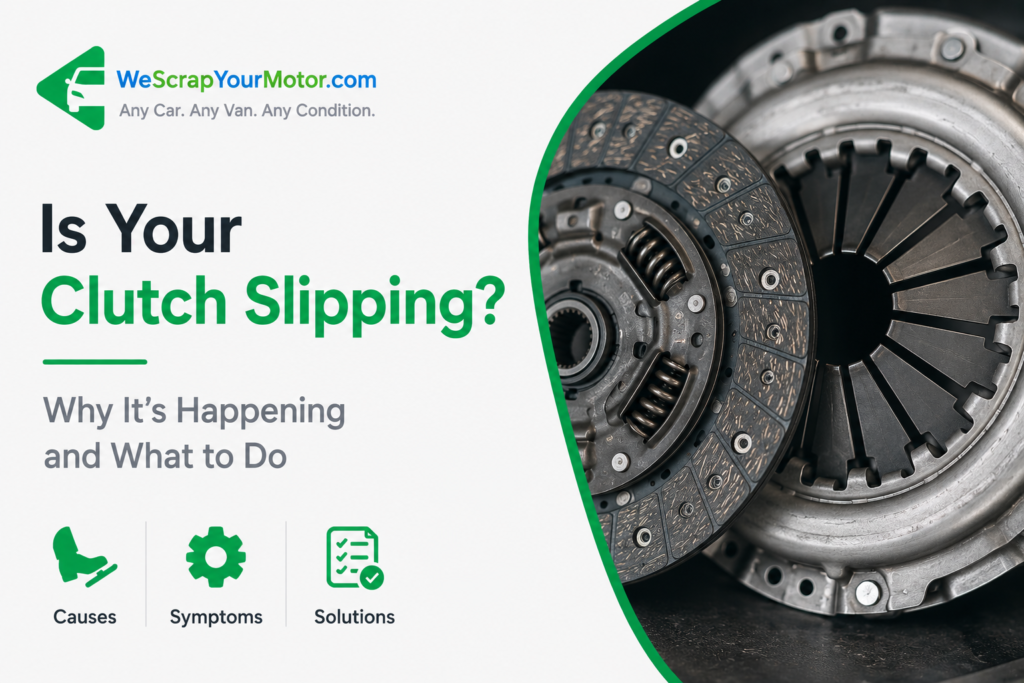
If your car suddenly struggles to accelerate, produces a burning smell, or feels strange while changing gears, you may be dealing with clutch slipping. This is one of the most common transmission problems in manual vehicles, especially in older cars across the UK.
Ignoring clutch slipping can lead to expensive repairs, poor fuel economy, and even complete clutch failure. In some cases, repairing the clutch may cost more than the value of the vehicle itself. That is why many drivers eventually decide to scrap their old cars instead of paying huge repair bills.
In this guide, we will explain the warning signs, causes, repair costs, and what you should do if your clutch starts slipping.
What is Clutch Slipping?
Clutch slipping happens when the clutch cannot fully connect the engine power to the gearbox. Instead of transferring power properly, the clutch loses grip, causing the engine revs to rise without increasing vehicle speed.
A healthy clutch smoothly transfers power from the engine to the wheels. However, when the clutch becomes worn or damaged, it struggles to maintain proper contact. This creates performance issues and makes driving unsafe.
Many UK drivers first notice clutch slipping while accelerating on motorways or driving uphill. The car feels weak even though the engine sounds louder than normal.
This issue is especially common in:
- Older manual cars
- High-mileage vehicles
- Cars driven heavily in stop-start traffic
- Vehicles used for towing
Common Signs of Clutch Slipping
Recognising the early signs of clutch slipping can help prevent further damage and expensive repairs.
1. Revs Increase but the Car Does Not Accelerate
This is one of the clearest slipping clutch symptoms. You press the accelerator, the engine revs rise quickly, but the vehicle speed barely increases.
This usually becomes more noticeable:
- During overtaking
- On steep hills
- While carrying heavy loads
2. Burning Smell While Driving
A slipping clutch creates excessive friction and heat. This often causes a sharp burning smell similar to burnt paper or rubber.
If you notice this smell regularly, the clutch friction material may already be badly worn.
3. Difficulty Changing Gears
Another sign of clutch slipping is rough or delayed gear changes. You may notice:
- Hard gear shifting
- Grinding noises
- Resistance while selecting gears
These symptoms may also indicate gearbox and clutch issues together.
4. Weak Acceleration
A damaged clutch reduces the amount of power reaching the wheels. As a result, the car feels slower and less responsive.
Many drivers initially mistake this for engine trouble when the real problem is actually clutch slipping.
5. High Clutch Biting Point
If the clutch only engages when the pedal is almost fully released, the clutch may be heavily worn.
This is a very common warning sign in older manual vehicles across the UK.
What Causes Clutch Slipping?
There are several reasons why clutch slipping happens. Some are related to wear and tear, while others result from poor driving habits or mechanical faults.
1. Worn Clutch Plate
The most common cause is a worn clutch plate. Over time, the friction material becomes thin and loses grip.
Most clutches naturally wear out after years of driving, especially in busy urban traffic conditions.
2. Riding the Clutch
Keeping your foot partially on the clutch pedal while driving creates constant friction and heat.
This bad driving habit can dramatically shorten clutch lifespan and increase the risk of clutch slipping.
3. Oil Contamination
Oil leaks from the engine or gearbox can reach the clutch surface. Once the clutch becomes contaminated, it loses friction and starts slipping.
Common leak sources include:
- Rear main seal
- Gearbox input shaft seal
- Hydraulic system leaks
4. Heavy Towing or Overloading
Towing caravans, trailers, or carrying excessive weight puts extra stress on the clutch system.
Over time, this can lead to overheating and premature clutch wear.
5. Faulty Pressure Plate or Flywheel
The pressure plate and flywheel work together with the clutch plate. If either component becomes damaged, the clutch may fail to engage properly.
In many older cars, replacing these parts can become very expensive.
Is It Safe to Drive With a Slipping Clutch?
Driving with clutch slipping is risky and can lead to complete clutch failure.
At first, the car may still feel drivable. However, the condition usually worsens quickly. Eventually, the clutch may stop transferring power completely, leaving the car unable to move.
Driving with a slipping clutch can also damage:
- The gearbox
- The flywheel
- Transmission components
This increases repair costs significantly.
You should avoid long journeys or motorway driving if your clutch is already slipping badly.
How Much Does Clutch Repair Cost in the UK?
Clutch repairs are not cheap, especially in the UK where labour costs continue rising.
Average clutch replacement costs include:
- Small cars: £400–£700
- Family cars: £600–£1,000
- Luxury or performance vehicles: £1,000+
If the flywheel also needs replacing, costs can rise even further.
Older vehicles often face another problem: the repair bill may exceed the actual value of the car.
If you want a detailed breakdown of repair pricing, read our guide on Clutch Replacement Cost: How Much Will You Have to Pay?
Should You Repair or Scrap the Car?
Sometimes repairing clutch slipping makes sense. However, in many cases, scrapping the vehicle is the smarter financial decision.
You should consider scrapping your car if:
- The vehicle has very high mileage
- The MOT is close to expiry
- Multiple mechanical problems already exist
- The gearbox is also damaged
- Repair costs exceed the car’s value
Many older cars in the UK develop several expensive faults at the same time. Paying for clutch replacement, gearbox repairs, and flywheel replacement together can become unrealistic.
Instead of investing thousands into an ageing vehicle, many drivers choose to sell or scrap their cars.
At We Scrap Your Motor, you can quickly get a quote for unwanted or damaged vehicles anywhere in the UK.
How to Prevent Clutch Slipping
Although some clutch wear is unavoidable, proper driving habits can help extend clutch life significantly.
Here are some simple ways to reduce the risk of clutch slipping:
1. Avoid Riding the Clutch
Do not rest your foot on the clutch pedal while driving.
2. Change Gears Smoothly
Aggressive gear changes create unnecessary strain on the clutch system.
3. Avoid Excessive Towing
Heavy loads increase clutch temperatures and wear.
4. Fix Oil Leaks Quickly
Small leaks can eventually contaminate the clutch surface.
5. Service Your Vehicle Regularly
Routine maintenance helps identify transmission problems before they become serious.
Should You Repair Your Clutch or Scrap the Car?
Clutch slipping is a common problem that should never be ignored. Early warning signs such as weak acceleration, burning smells, and rising engine revs can quickly develop into complete clutch failure.
In some cases, replacing the clutch is worthwhile. However, for older or high-mileage vehicles, repair costs can become higher than the value of the car itself.
Before spending a large amount on repairs, compare the costs carefully and consider whether keeping the vehicle still makes financial sense.If your vehicle is no longer worth repairing, We Scrap Your Motor can help you scrap your car quickly and easily across the UK.