
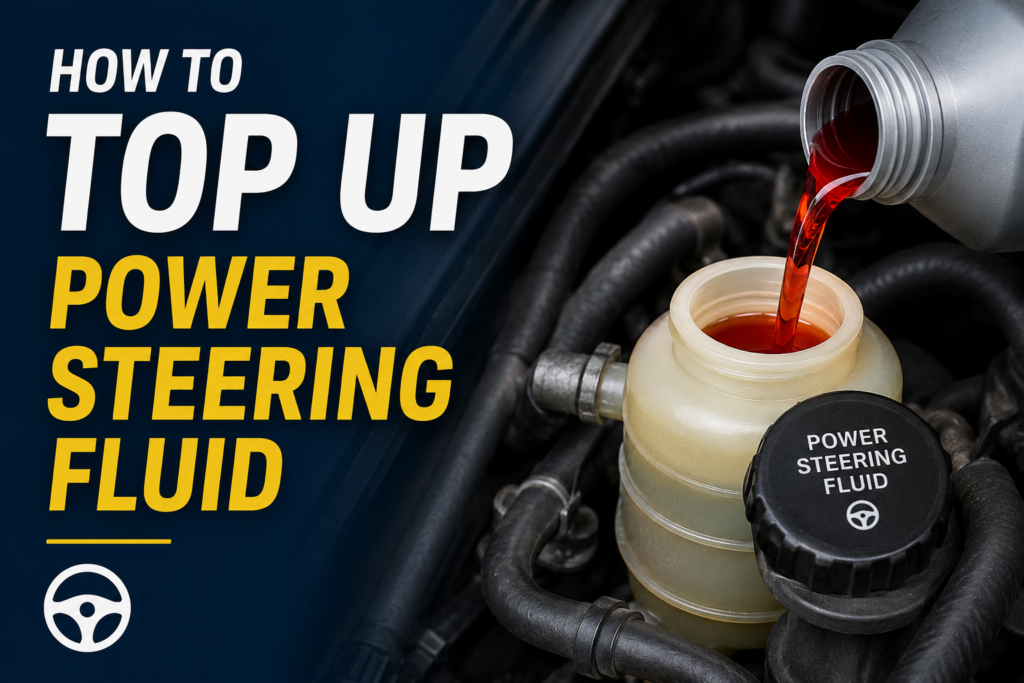
If your steering wheel suddenly feels stiff, makes whining noises, or becomes harder to turn, low Power Steering Fluid could be the reason. Many UK drivers ignore steering fluid maintenance until the problem becomes serious and expensive to repair.
Your steering system relies on clean hydraulic fluid to operate smoothly. When fluid levels drop, steering performance suffers, and continued driving may eventually damage the steering pump or steering rack. In some cases, repeated steering problems can even make an older vehicle too expensive to repair.
This step-by-step UK guide explains how to check and top up Power Steering Fluid, common warning signs to watch for, what causes steering fluid leaks, and when it may be smarter to scrap an ageing vehicle instead of paying for major steering repairs.
What Is Power Steering Fluid and Why Does It Matter?
Power Steering Fluid is a hydraulic fluid used in many vehicles to help drivers steer more easily. It transfers hydraulic pressure through the steering system while also lubricating important steering components.
Without clean steering fluid, the hydraulic steering system experiences:
- Increased friction
- Overheating
- Pressure loss
- Internal wear
Over time, contaminated or low fluid levels can damage:
- The steering pump
- Steering rack
- Hydraulic seals
- Steering hoses
Although some modern vehicles now use electric steering systems, many cars on UK roads still rely on hydraulic steering systems that require regular maintenance.
Maintaining proper Power Steering Fluid levels helps:
- Improve steering response
- Reduce steering effort
- Prevent steering pump damage
- Extend steering system lifespan
Signs Your Power Steering Fluid Is Low
Low steering fluid levels usually cause noticeable symptoms before major damage occurs.
1. Steering Wheel Hard to Turn
One of the most common low power steering fluid symptoms is difficult steering, especially at low speeds or while parking.
2. Whining Noise While Turning
A whining or squealing noise often means air has entered the hydraulic steering system due to low fluid levels.
3. Jerky or Delayed Steering Response
If steering feels inconsistent or rough, your steering system may not be receiving enough hydraulic pressure.
4. Fluid Leak Under the Vehicle
A power steering fluid leak may appear as red, pink, or brown liquid underneath the vehicle.
5. Vibrations During Turns
Low or contaminated fluid can reduce steering smoothness and create vibrations while turning.
Ignoring these warning signs may eventually lead to:
- Steering rack problems
- Steering pump failure
- MOT steering issues
- Expensive repair costs in the UK
What You Need Before Topping Up Power Steering Fluid
Before starting, gather the following items:
- Correct steering fluid type
- Funnel
- Clean cloth or paper towel
- Gloves
- Vehicle owner’s manual
Using the wrong steering fluid can damage the hydraulic steering system, so always check your vehicle handbook before adding fluid.
How to Top Up Power Steering Fluid Step by Step
Topping up steering fluid is usually simple and can be done at home in a few minutes.
Step 1: Park the Vehicle Safely
Park your car on a flat surface and switch off the engine. Allow the engine to cool slightly before checking fluid levels.
This helps provide a more accurate reading and reduces the risk of burns from hot engine components.
Step 2: Locate the Steering Fluid Reservoir
Open the bonnet and locate the steering fluid reservoir. In most vehicles, the cap is clearly labelled “Power Steering.”
The reservoir is usually positioned:
- Near the engine belts
- Beside the coolant reservoir
- Close to the steering pump
If you cannot find it, refer to your owner’s manual.
Step 3: Check the Fluid Level
Most reservoirs include:
- MIN/MAX markings
- or a dipstick attached to the cap
Remove the cap carefully and inspect the current fluid level.
If the level is below the minimum line, your Power Steering Fluid is low and needs topping up.
Some vehicles also display separate hot and cold level indicators.
Step 4: Inspect the Fluid Condition
Before adding fluid, inspect its colour and condition.
Healthy fluid is usually:
- Red
- Pink
- Amber
Bad or contaminated fluid may appear:
- Dark brown
- Black
- cloudy
- Burnt-smelling
Dirty fluid often indicates internal steering wear or overdue maintenance.
If the fluid looks heavily contaminated, you may need a full power steering fluid replacement instead of a simple top-up.
Step 5: Slowly Add Power Steering Fluid
Place a funnel into the reservoir opening and slowly pour in small amounts of fluid.
Avoid:
- Overfilling
- Spilling fluid onto engine components
- Mixing different fluid types
Check the level regularly while adding fluid.
Adding too much fluid can increase pressure inside the steering system and create leaks.
Step 6: Start the Engine and Test the Steering
After topping up the fluid:
- Secure the reservoir cap
- Start the engine
- Turn the steering wheel fully left and right several times
This helps circulate the fluid through the hydraulic steering system.
Listen carefully for:
- Whining noises
- Squealing
- Vibrations
- Delayed steering response
If steering problems continue after topping up fluid, there may be a larger steering issue requiring inspection.
Common Mistakes to Avoid When Adding Power Steering Fluid
Many drivers accidentally create bigger steering problems by making simple mistakes during maintenance.
1. Overfilling the Reservoir
Too much fluid can increase hydraulic pressure and damage seals.
2. Using the Wrong Fluid
Different vehicles require different steering fluids. Always follow manufacturer recommendations.
3. Ignoring Fluid Leaks
Repeatedly topping up fluid without fixing leaks only hides the real problem.
4. Mixing Old and New Fluid Excessively
Dirty fluid contamination can reduce the effectiveness of fresh fluid.
5. Ignoring Burnt or Dark Fluid
If fluid smells burnt or appears black, your steering system may already be suffering internal wear.
Why Your Car Keeps Losing Power Steering Fluid
If your steering fluid level drops repeatedly, there is usually an underlying problem.
Common causes include:
Steering Rack Leaks
A leaking steering rack is one of the most expensive steering repairs in the UK.
Damaged Hydraulic Hoses
Old hoses can crack or weaken over time.
Steering Pump Seal Failure
Worn seals may allow fluid to escape under pressure.
Reservoir Damage
Cracked reservoirs can leak fluid slowly over time.
Ignoring these issues can eventually lead to complete steering system failure.
Power Steering Fluid Repair Costs in the UK
The cost of steering repairs varies depending on the severity of the problem.
Average UK Steering Repair Costs
| Repair Type | Estimated UK Cost |
| Fluid top-up | £20–£40 |
| Full fluid flush | £60–£120 |
| Hose replacement | £80–£250 |
| Steering pump replacement | £250–£600 |
| Steering rack replacement | £400–£1,200 |
For older vehicles with multiple mechanical issues, expensive steering repairs may not always be financially worthwhile.
When Is It Better to Scrap a Car Instead of Repairing Steering Problems?
Some steering issues are minor and affordable to repair. However, serious steering system damage can quickly become uneconomical on older vehicles.
You may want to consider scrapping your vehicle if:
- Repair costs exceed the vehicle value
- The car repeatedly fails MOT inspections
- Steering rack replacement is required
- Multiple mechanical problems exist
- Fluid leaks continue returning
High-mileage cars often develop several expensive issues at once, including:
- Suspension wear
- Gearbox faults
- Hydraulic leaks
- Electrical problems
If your vehicle is becoming too costly to maintain, you can scrap your car in the UK with We Scrap Your Motor and receive a quick valuation instead of investing in major steering repairs.
Tips to Keep Your Steering System Healthy
Proper steering maintenance can help prevent expensive breakdowns.
1. Check Fluid Levels Regularly
Inspect steering fluid at least once per month.
2. Fix Leaks Early
Small leaks often become expensive repairs if ignored.
3. Avoid Dry Steering
Turning the steering wheel while stationary increases strain on the steering system.
4. Replace Dirty Fluid on Time
Routine maintenance helps prevent steering pump damage and contaminated steering fluid buildup.
5. Use Manufacturer-Approved Fluid
Using the correct fluid improves hydraulic system performance and longevity.
Can Low Power Steering Fluid Damage Your Car?
Yes. Driving with low steering fluid can damage:
- Steering pumps
- Steering racks
- Hydraulic seals
- Hoses
Low fluid also reduces steering responsiveness and may affect driving safety.
Can Steering Problems Cause MOT Issues in the UK?
Yes. Serious steering problems can contribute to MOT failures, especially if inspectors notice:
- Steering stiffness
- Leaking fluid
- Damaged steering components
- Unsafe steering response
Regular maintenance helps reduce the risk of MOT steering issues.
Final Thoughts on Power Steering Fluid
Checking and topping up Power Steering Fluid is a simple maintenance task that can help prevent major steering system damage. Low fluid levels often cause difficult steering, whining noises, vibrations, and fluid leaks that should never be ignored.
While topping up fluid may temporarily improve steering performance, repeated fluid loss usually signals a deeper mechanical problem. In many older vehicles, expensive steering rack or pump repairs may eventually cost more than the car itself.
Regular steering maintenance, early leak detection, and timely fluid replacement can help extend your vehicle’s lifespan and reduce expensive repair bills. However, if your vehicle continues developing costly steering problems, comparing repair costs against the vehicle’s overall value may help you decide whether repairing or scrapping the car is the smarter financial option.