
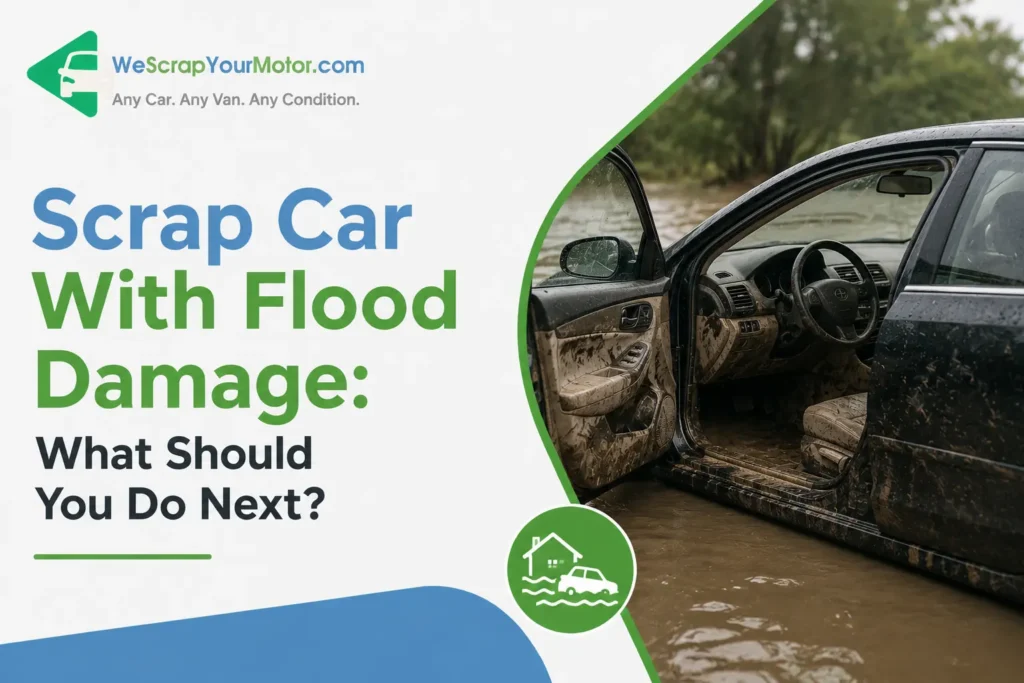
Yes, you can scrap a car with flood damage in the UK. Floodwater can seriously affect a vehicle’s engine, electronics, brakes, interior, and structural components. While some cars exposed to clean water may be repairable, extensive flooding often leads to costly repairs and long-term reliability issues. In many cases, scrapping the vehicle is the safest and most economical choice.
What Is Considered Flood Damage?
Flood damage occurs when water enters parts of a vehicle that are not designed to get wet.
This can happen during:
- Heavy rainfall
- Flash floods
- Driving through deep water
- River flooding
- Coastal flooding
- Storm surges
- Waterlogged roads
The severity of the damage depends on several factors, including:
- How deep the water was
- How long the vehicle remained submerged
- Whether the engine was running
- Whether the water was fresh or contaminated
- Which parts of the vehicle were affected
For example, a vehicle parked briefly in shallow clean water may only require minor repairs. By contrast, a car submerged above the dashboard for several hours often suffers extensive mechanical and electrical damage.
Why Floodwater Is More Harmful Than It Looks
Many people believe that once a flooded vehicle dries out, it’s safe to drive again.
Unfortunately, that’s rarely the case.
Water can enter hidden areas that aren’t immediately visible, causing problems that continue developing weeks or even months after the flood.
Unlike collision damage, flood damage doesn’t always reveal itself straight away.
Instead, moisture trapped inside electrical connectors, wiring, bearings, and insulation can slowly lead to corrosion and system failures over time.
If the floodwater contained mud, sewage, salt, or chemicals, the damage can become even more severe.
Can You Scrap a Flood-Damaged Car?
Absolutely.
Licensed scrap car companies regularly purchase vehicles that have been damaged by flooding.
Whether the vehicle:
- Won’t start
- Has water-damaged electronics
- Has mould inside the cabin
- Has suffered engine damage
- Has been declared an insurance write-off
it can usually still be scrapped legally in the UK.
Even severely flooded vehicles still contain valuable recyclable materials, including:
- Steel
- Aluminium
- Copper
- Catalytic converter
- Alloy wheels
- Engine components (where reusable)
- Gearbox components
- Body panels
If the vehicle is no longer safe or able to drive, most reputable companies can also arrange free collection.
If you’re unfamiliar with the process, our guide on How to Scrap a Car in the UK explains everything you need to know before arranging the collection.
What Parts of a Car Are Most Affected by Flooding?
Floodwater rarely damages just one component.
Instead, it often affects several systems at the same time.
Engine
If water enters the engine while it’s running, serious internal damage can occur.
This happens because water cannot be compressed like air.
The result may include:
- Bent connecting rods
- Cracked pistons
- Damaged crankshaft
- Broken valves
- Complete engine failure
Attempting to restart a flooded engine before it’s inspected can make the damage significantly worse.
If your engine has already failed, our guide on Should I Scrap a Car With Engine Failure? explains when scrapping may be the better financial option.
Electrical Systems
Modern vehicles rely heavily on electronics.
Floodwater can damage:
- Wiring looms
- Sensors
- Control modules
- ECU
- Fuse boxes
- Lighting systems
- Parking sensors
- Cameras
- Infotainment systems
Even after drying out, corrosion inside connectors may continue causing faults long after the flood has passed.
Interior
Water entering the cabin often affects:
- Carpets
- Seats
- Roof lining
- Door insulation
- Soundproofing
- Seat mechanisms
Once these materials absorb contaminated floodwater, they can become difficult to clean completely.
This often results in:
- Persistent damp smells
- Mould growth
- Mildew
- Interior staining
Replacing a complete interior can be expensive, particularly in premium vehicles.
Braking System
Floodwater may also affect:
- Brake discs
- Brake pads
- Brake pipes
- ABS sensors
Although some components simply require cleaning or replacement, prolonged exposure to moisture can accelerate corrosion.
Suspension and Bearings
Wheel bearings, suspension joints, and steering components may lose lubrication after prolonged water exposure.
Over time, this can lead to:
- Noisy bearings
- Corrosion
- Increased wear
- Reduced handling performance
Can a Flood-Damaged Car Be Repaired?
Sometimes, but not always.
Whether repairs are worthwhile depends largely on the severity of the flooding.
For example:
Minor Flood Exposure
A vehicle driven through shallow water may only require:
- Drying
- Fluid replacement
- Brake inspection
- Electrical checks
If water never reached major electrical systems or entered the engine, repairs may be relatively straightforward.
Moderate Flood Damage
When water reaches the cabin or lower electrical components, repair costs increase considerably.
Common work may include:
- Interior replacement
- Wiring repairs
- Sensor replacement
- ECU diagnostics
- Brake servicing
Severe Flood Damage
If water reaches dashboard height or the vehicle remains submerged for several hours, repairs often become uneconomical.
This is because multiple systems usually require attention simultaneously.
Rather than replacing one component, technicians may need to repair or replace:
- Engine
- Transmission
- Wiring harness
- ECU
- Interior
- Safety systems
- Multiple electronic modules
For older vehicles, these combined costs frequently exceed the vehicle’s market value.
Why Flood-Damaged Cars Often Develop Problems Months Later
One of the biggest challenges with flood damage is that not every fault appears immediately.
Moisture trapped inside wiring connectors and electronic modules can remain hidden long after the vehicle appears dry.
Weeks or months later, owners may begin noticing:
- Random warning lights
- Battery drain
- Starting problems
- Electrical faults
- Corrosion inside connectors
- Sensor failures
- Dashboard errors
This delayed damage is one reason insurers are often cautious when assessing flooded vehicles.
When Insurance Companies Decide Not to Repair
After inspecting a flood-damaged vehicle, an insurance company may conclude that repairing it isn’t economically viable.
This decision is often based on:
- Estimated repair costs
- Risk of future electrical faults
- Vehicle age
- Current market value
- Safety concerns
In these situations, the vehicle may be declared a total loss, even if it appears relatively undamaged on the outside.
Warning Signs That Flood Damage May Be More Serious Than It Appears
Some problems are immediately obvious.
Others remain hidden until weeks later.
Watch for signs such as:
- Musty smell inside the cabin
- Condensation inside lights
- Rust beneath the seats
- Water stains on upholstery
- Electrical systems behaving unpredictably
- Damp carpets
- Corrosion around wiring connectors
- Engine warning lights after flooding
If several of these symptoms are present, arranging a professional inspection is strongly recommended before investing in repairs.
How Much Does It Cost to Repair Flood Damage in the UK?
The cost of repairing a flood-damaged vehicle depends on how much water entered the car and which systems were affected.
In some cases, replacing a few damaged components may be enough. In others, water can affect the engine, electrical systems, interior, and safety features at the same time, making repairs significantly more expensive.
Below are typical repair costs for common flood-related issues in the UK.
| Repair | Typical UK Cost |
| Interior drying and cleaning | £200–£800 |
| Carpet and insulation replacement | £300–£1,200 |
| ECU replacement and programming | £700–£2,000+ |
| Wiring loom repair | £500–£2,500+ |
| Wheel bearing replacement | £250–£700 |
| Engine repair after water damage | £1,500–£5,000+ |
| Complete engine replacement | £2,500–£7,000+ |
These figures are only estimates. The final cost depends on the make, model, and extent of the damage.
Because floodwater often affects several systems at once, the total repair bill can quickly exceed the vehicle’s market value.
Does Flood Damage Affect Scrap Value?
Yes, but a flood-damaged vehicle can still have value.
Unlike a private buyer, a licensed scrap company doesn’t only look at whether the vehicle can be driven. They also assess the recyclable materials and components that remain valuable.
Several factors influence the final offer, including:
- Vehicle make and model
- Age
- Overall weight
- Current scrap metal prices
- Extent of the flood damage
- Condition of reusable parts
- Collection location
Although flood damage may reduce the value of some components, the vehicle still contains recyclable materials such as steel, aluminium, and copper.
If you’re curious about how scrap values are calculated, our guide on How Much Is My Scrap Car Worth? explains the process in more detail.
Can a Flood-Damaged Car Be Collected?
Yes.
If your vehicle won’t start or is unsafe to drive after flooding, most reputable UK scrap car companies can arrange collection using specialist recovery vehicles.
This applies whether the car has:
- Engine damage
- Electrical faults
- Flat battery caused by flooding
- Water inside the cabin
- Seized brakes
- Insurance write-off status
When requesting a quote, describe the extent of the flood damage as accurately as possible. This helps ensure the correct recovery vehicle is sent.
What Documents Do You Need?
The paperwork is generally the same as for any other scrap vehicle.
Where possible, have the following available:
- Vehicle registration number
- V5C logbook
- Proof of ownership
- Photo identification if requested
If your V5C has been lost or damaged, many licensed scrap companies can still process the vehicle after carrying out additional ownership checks.
You can find more information in Can I Scrap a Car Without a V5?
What Happens After a Flood-Damaged Car Is Scrapped?
Flood-damaged vehicles are recycled using the same regulated process as other end-of-life vehicles, but extra care may be taken when handling water-contaminated components.
Vehicle Inspection
The vehicle’s details are checked to confirm ownership and ensure it can be processed legally.
Depollution
Before dismantling begins, hazardous substances are safely removed, including:
- Fuel
- Engine oil
- Brake fluid
- Coolant
- Air conditioning gases
- Battery
This step helps prevent contamination during recycling.
Recovery of Reusable Components
If suitable, undamaged parts may be removed before the vehicle is crushed.
Depending on the condition of the car, these may include:
- Alloy wheels
- Body panels
- Engine components
- Gearbox components
- Mirrors
- Suspension parts
Metal Recycling
The remaining shell is processed so valuable metals such as steel, aluminium, and copper can be recovered and reused.
This reduces landfill waste and supports sustainable manufacturing.
Certificate of Destruction
Where applicable, the Authorised Treatment Facility (ATF) issues a Certificate of Destruction (CoD) to confirm the vehicle has been permanently recycled.
Steps to Take After Your Car Has Been Flooded
If your vehicle has recently been exposed to floodwater, taking the right steps can help you avoid further damage and make a more informed decision.
Avoid Starting the Engine Immediately
If water has entered the engine, attempting to start the vehicle could cause serious internal damage.
If you suspect flooding above the wheel hubs or air intake, have the vehicle inspected before trying to restart it.
Document the Damage
Take clear photographs of:
- The exterior
- Interior
- Water marks
- Dashboard warning lights
- Engine bay (if safe to do so)
These images may be useful if you’re dealing with an insurance claim or obtaining repair estimates.
Arrange a Professional Inspection
Some flood-related damage isn’t visible straight away.
A qualified mechanic can assess:
- Engine condition
- Electrical systems
- Brake components
- Suspension
- Signs of corrosion
This information can help you decide whether repairing the vehicle is financially worthwhile.
Compare Repair Costs With Scrap Value
Before approving expensive repairs, compare the total estimate with your vehicle’s current market value and potential scrap value.
If repairs approach or exceed the value of the car, scrapping may be the more practical option.
Common Mistakes to Avoid
Driving Through Floodwater Without Assessing the Risk
Driving through water that’s deeper than expected can cause extensive engine and electrical damage within seconds.
If you’re unsure of the water depth, it’s generally safer to avoid driving through it.
Trying to Restart a Flooded Engine
If water has entered the engine, repeatedly trying to start the vehicle can increase the damage.
It’s best to have the car inspected before attempting to restart it.
Ignoring Moisture Inside the Cabin
Even if the vehicle appears dry, moisture trapped beneath carpets or inside insulation can lead to mould, unpleasant odours, and corrosion.
Assuming the Car Is Fully Repaired Once It Dries
Drying the vehicle doesn’t always resolve hidden electrical or corrosion issues.
Problems may develop gradually over the following weeks or months.
Accepting the First Scrap Quote
As with any scrap vehicle, comparing several offers can help you achieve a better price.
Frequently Asked Questions
Can I legally scrap a flood-damaged car?
Yes. Licensed scrap companies regularly purchase vehicles that have been damaged by flooding.
Will flood damage always write off a car?
No. Some vehicles with minor flood exposure can be repaired. However, severe flooding often results in insurance write-offs because of the potential for widespread mechanical and electrical damage.
Can floodwater damage an engine?
Yes. If water enters the engine while it’s running, it can cause severe internal damage that may require a complete engine replacement.
Does flood damage affect electronics?
Yes. Water can damage wiring, sensors, connectors, and electronic control units, sometimes causing faults that appear weeks or months later.
Can I scrap a flood-damaged car that won’t start?
Yes. Most scrap companies buy non-running vehicles and provide collection.
Can I scrap a flooded car without an MOT?
Yes. A valid MOT certificate isn’t required when scrapping a vehicle.
Read more in Can I Scrap a Car With No MOT?
How long does it take to scrap a flood-damaged vehicle?
Collection can often be arranged within one or two working days, depending on your location.
You can learn more in How Long Does It Take to Scrap a Car in the UK?
Can mould inside the car be removed?
Minor mould can sometimes be cleaned, but extensive contamination following flooding may require replacement of carpets, insulation, and interior trim.
Should I buy a flood-damaged car?
It depends on the extent of the damage and whether repairs have been carried out to a high standard. A professional inspection is strongly recommended before purchasing any vehicle with a history of flood damage.
Choosing the Safest and Most Cost-Effective Option
Flood damage can affect far more than what’s visible on the surface. Even if a vehicle appears to have dried out, hidden moisture can continue to damage electrical systems, mechanical components, and the interior long after the flood has passed. That’s why it’s important to look beyond the immediate repairs and consider the long-term reliability of the vehicle.
If the flooding was minor and a professional inspection confirms that only limited repairs are needed, restoring the car may still be a sensible option. However, when water has reached the engine, electrical systems, or structural components, repair costs can quickly become uneconomical, particularly for older vehicles with lower market values.
At We Scrap Your Motor, we buy flood-damaged vehicles in all conditions, including non-running cars, insurance write-offs, and vehicles with severe water damage. If you’re unsure whether your car is worth repairing, requesting a no-obligation quote can help you compare its scrap value with the estimated repair costs and make a confident decision.