
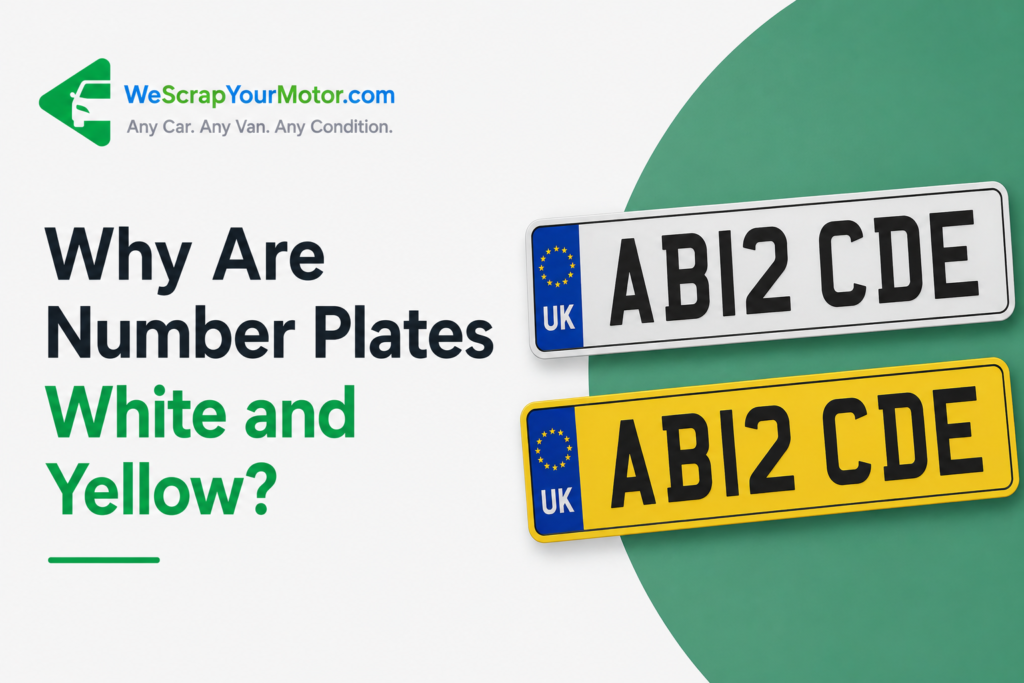
If you’ve ever driven on UK roads, you’ve probably noticed that every vehicle follows the same number plate colour pattern: a white plate at the front and a yellow plate at the rear. Many motorists ask, Why are Number Plates White and Yellow? Is it simply tradition, or is there a legal reason behind it?
The answer involves road safety, visibility, and government regulations. Understanding Why are Number Plates White and Yellow? is important for every driver, especially if you’re planning to sell, replace, or scrap your vehicle. Non-compliant number plates can result in MOT failures, fines, and complications during vehicle disposal.
In this guide, we’ll explain the history of UK number plates, the legal requirements surrounding them, and why these colours remain an essential part of road safety today.
Why Are Number Plates White and Yellow in the UK?
The simple answer to Why are Number Plates White and Yellow? is visibility.
UK law requires vehicles to display:
- A white reflective number plate at the front.
- A yellow reflective number plate at the rear.
These contrasting colours make it easier for other road users, law enforcement officers, and automated traffic systems to identify vehicles quickly and accurately.
The colour scheme is not optional. It is part of the UK’s vehicle registration regulations and must be followed by most vehicles on public roads.
The History Behind UK Number Plate Colours
To fully understand Why are Number Plates White and Yellow?, it’s helpful to look at the history of vehicle registration plates in Britain.
Early Number Plates
When registration plates were first introduced in the early 1900s, vehicles commonly used black plates with white or silver characters. These plates were simple but often difficult to read in poor weather or low-light conditions.
As traffic volumes increased, authorities needed a better system that would improve visibility and vehicle identification.
The Introduction of Reflective Plates
In the 1970s, the UK introduced reflective registration plates. The new design used a white reflective background for the front and a yellow reflective background for the rear.
This change dramatically improved visibility during:
- Night driving
- Foggy conditions
- Heavy rain
- Poor weather situations
Reflective materials made it easier for headlights to illuminate number plates, helping motorists and law enforcement identify vehicles from greater distances.
The Modern Standard
Today, the white-front and yellow-rear system is the national standard throughout the UK. It remains one of the simplest and most effective ways to improve vehicle recognition and road safety.
Why Is the Front Number Plate White?
One reason behind Why are Number Plates White and Yellow? is that white provides excellent visibility when illuminated by oncoming headlights.
1. Enhanced Visibility
White reflects light effectively, making front registration plates easy to read even at night.
2. Better Vehicle Recognition
Police officers, traffic cameras, and other motorists can quickly identify approaching vehicles because the white background provides strong contrast against black registration characters.
3. Improved Road Safety
Clear vehicle identification helps reduce confusion on busy roads and assists authorities in monitoring traffic effectively.
Why Is the Rear Number Plate Yellow?
The yellow rear plate serves a different but equally important purpose.
1. Identifying Vehicle Direction
One benefit of having yellow plates at the rear is that road users can instantly determine which direction a vehicle is facing.
When motorists see a yellow plate, they immediately know they are looking at the back of a vehicle.
2. Superior Night-Time Visibility
Yellow reflective surfaces remain highly visible in darkness while providing sufficient contrast for black registration characters.
3. Supporting Traffic Enforcement
Automatic Number Plate Recognition (ANPR) systems rely heavily on clear and readable registration plates. Yellow rear plates help these systems accurately identify vehicles on UK roads.
Why Are Number Plates White and Yellow Important for Road Safety?
Road safety is the primary reason Why are Number Plates White and Yellow? remains a legal requirement.
1. Easier Vehicle Identification
Police officers can identify vehicles more quickly during:
- Traffic stops
- Road incidents
- Criminal investigations
- Accident reporting
2. Improved Visibility in Poor Weather
Rain, fog, snow, and darkness can significantly reduce visibility. Reflective number plates help ensure registration details remain readable.
3. Enhanced Traffic Monitoring
Modern traffic management systems rely on registration plate visibility to monitor congestion, enforce regulations, and improve road safety.
4. Faster Emergency Response
In emergency situations, clear vehicle identification can help authorities respond more efficiently and accurately.
UK Number Plate Regulations You Should Know
UK number plates must comply with strict regulations.
Requirements include:
- Correct font style
- Proper character spacing
- Reflective material
- White front plate
- Yellow rear plate
- Black characters
Plates that fail to meet these standards may result in penalties.
Common violations include:
- Decorative fonts
- Tinted covers
- Altered spacing
- Damaged plates
- Incorrect colours
Drivers should regularly inspect their number plates to ensure they remain legal and readable.
What Happens If Your Number Plates Are Not Legal?
Many motorists underestimate the importance of complying with registration plate regulations.
1. MOT Failure
An unreadable, damaged, or incorrectly coloured number plate can result in an MOT failure.
Common reasons include:
- Cracked plates
- Missing characters
- Faded backgrounds
- Improper spacing
2. Fines and Penalties
Drivers can receive financial penalties for displaying non-compliant registration plates.
3. Issues When Selling or Scrapping a Vehicle
If you’re planning to sell or dispose of your vehicle, registration plates play an important role in confirming the vehicle’s identity.
Problems with number plates can slow down inspections and paperwork processes.
Can You Use Black and Silver Number Plates Instead?
Many classic vehicle owners ask whether black and silver plates are legal.
The answer depends on the age of the vehicle.
Historic vehicles that qualify under UK regulations may legally display black and silver number plates.
However, most modern vehicles must use the standard reflective format.
For a complete guide, read our article on black and silver number plates to understand eligibility requirements and legal restrictions.
Do Number Plate Rules Matter When Scrapping a Car?
Absolutely.
If you’re considering scrapping your vehicle, understanding Why are Number Plates White and Yellow? and ensuring your registration details are accurate can help simplify the process.
Vehicle Verification
Authorised treatment facilities use registration details to verify vehicle ownership and identification.
DVLA Records
Accurate vehicle information helps ensure DVLA records are updated correctly when a car is scrapped.
Avoiding Delays
Keeping your number plates intact and readable can help avoid unnecessary delays during inspections and paperwork processing.
If you’re ready to dispose of an unwanted vehicle, visit We Scrap Your Motor to learn more about professional vehicle scrappage services and how the process works.
Common Questions About Why Are Number Plates White and Yellow?
Q1-Can I Change the Colour of My Number Plates?
No. Most vehicles must follow the standard white-front and yellow-rear format.
Q2-Do Private Number Plates Follow Different Rules?
No. Personalised registrations must still comply with all DVLA regulations regarding colours, spacing, and fonts.
Q3-What Happens If My Plate Becomes Faded?
You should replace it immediately. Faded plates can become difficult to read and may fail an MOT inspection.
Q4-Are Number Plate Colours Different in Other Countries?
Yes. Different countries use different registration plate systems. However, the UK’s white and yellow format is one of the most recognisable systems in the world.
Interesting Facts About UK Number Plates
Here are some interesting facts related to Why are Number Plates White and Yellow?
- Reflective plates became widely adopted during the 1970s.
- The colour system helps drivers instantly recognise vehicle direction.
- ANPR technology depends heavily on readable registration plates.
- Number plates are among the most regulated vehicle components in the UK.
- Millions of registration plate scans occur every day across UK roads.
These facts demonstrate how important number plate design is for road safety and traffic management.
Conclusion
So, Why are Number Plates White and Yellow?
The answer comes down to visibility, safety, and legal compliance. White front plates and yellow rear plates make vehicles easier to identify, improve road safety, support law enforcement systems, and help drivers recognise vehicle direction instantly.
Understanding Why are Number Plates White and Yellow? can also help motorists avoid MOT failures, fines, and complications when selling or scrapping a vehicle.
Whether you’re maintaining your current vehicle or preparing it for disposal, ensuring your number plates remain legal and readable is an important part of responsible vehicle ownership in the UK.