
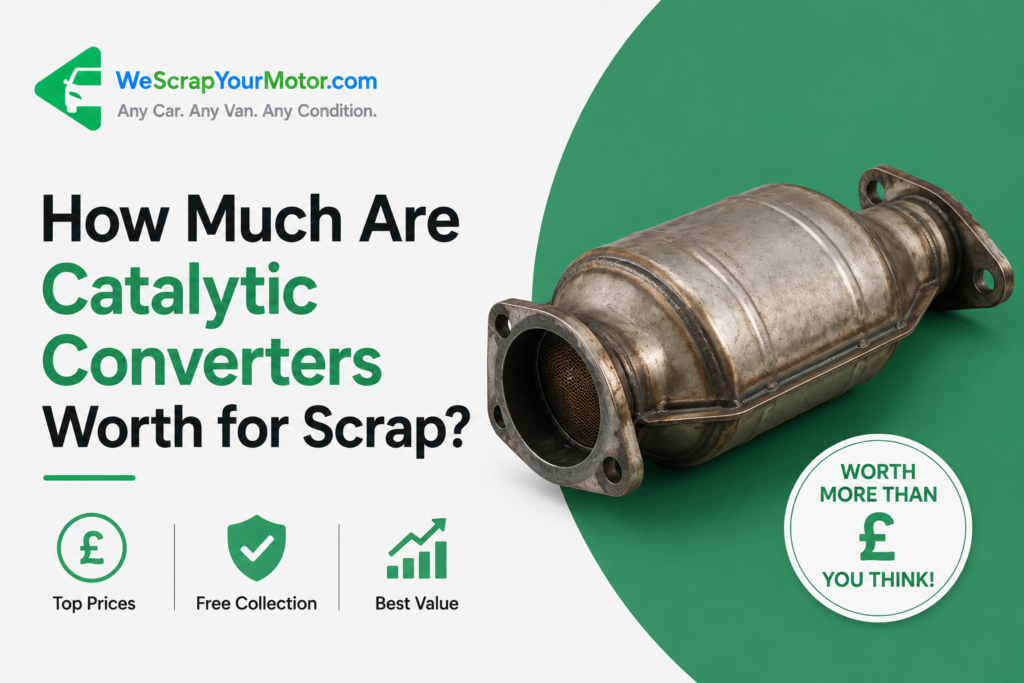
If you’re planning to scrap a vehicle, you may be surprised to learn that one of its most valuable components isn’t the engine, wheels, or battery, it’s the catalytic converter.
Many UK vehicle owners ask, “how much are catalytic converters worth?” The answer depends on several factors, including the make and model of the vehicle, the condition of the converter, and current precious metal prices. Some catalytic converters may be worth less than £100, while others from hybrid or luxury vehicles can be worth more than £1,000.
At We Scrap Your Motor, we work with vehicle owners across the UK every day and understand how catalytic converters contribute to overall scrap vehicle values. In this guide, we’ll explain everything you need to know about catalytic converter pricing, what affects their value, and how to maximise your return when scrapping a car.
What Is a Catalytic Converter?
A catalytic converter is an emissions-control device installed within a vehicle’s exhaust system. Its purpose is to reduce harmful pollutants before they leave the tailpipe.
Inside a catalytic converter are several precious metals, including:
- Platinum
- Palladium
- Rhodium
These metals help convert harmful gases such as carbon monoxide, hydrocarbons, and nitrogen oxides into less harmful emissions.
Because these precious metals are valuable and recyclable, catalytic converters often have significant scrap value. This is the primary reason so many vehicle owners search for how much are catalytic converters worth before scrapping their cars.
Quick Answer: How Much Are Catalytic Converters Worth?
If you’re looking for a quick estimate, here are typical UK scrap values:
| Vehicle Type | Typical Catalytic Converter Value |
| Small Petrol Cars | £50–£150 |
| Family Cars | £100–£400 |
| Diesel Vehicles | £80–£350 |
| Luxury Vehicles | £300–£1,000+ |
| Hybrid Vehicles | £400–£1,200+ |
These figures are estimates only. Actual values depend on current market conditions and the specific converter model.
So when someone asks how much are catalytic converters worth, the most accurate answer is that values vary considerably depending on the vehicle and the metals inside the converter.
Why Are Catalytic Converters Worth So Much?
The high value of catalytic converters comes from the rare metals they contain.
1. Platinum
Platinum has been used in catalytic converters for decades because of its ability to reduce harmful emissions. It remains one of the key contributors to catalytic converter scrap value.
2. Palladium
Palladium is heavily used in modern petrol vehicles. Global demand from the automotive industry has significantly increased its value over recent years.
3. Rhodium
Rhodium is often the most valuable precious metal found in catalytic converters. It is extremely rare and highly effective at reducing nitrogen oxide emissions.
The combination of these metals explains why catalytic converter recycling has become such a major industry in the UK and why many people want to know how much are catalytic converters worth before selling or scrapping a vehicle.
Factors That Affect Catalytic Converter Scrap Value
Not all catalytic converters are created equal. Several important factors influence their market value.
1. Vehicle Make and Model
One of the biggest influences on catalytic converter prices is the vehicle itself.
Some manufacturers use higher concentrations of precious metals than others. This means two converters that look similar may have dramatically different values.
Examples of higher-value converters often come from:
- Toyota
- Lexus
- Honda
- BMW
- Mercedes-Benz
Hybrid vehicles are particularly valuable because their catalytic converters typically contain higher levels of precious metals and experience less wear over time.
2. Current Precious Metal Prices
The value of platinum, palladium, and rhodium fluctuates daily based on global supply and demand.
When precious metal prices rise, catalytic converter values usually increase as well.
This means the answer to how much are catalytic converters worth today may be very different from the answer six months from now.
Professional recyclers constantly monitor metal markets to determine accurate pricing.
3. OEM vs Aftermarket Converters
Original Equipment Manufacturer (OEM) catalytic converters are generally worth more than aftermarket alternatives.
OEM converters typically contain higher concentrations of precious metals, making them more desirable for recyclers.
Aftermarket converters may still have value, but they often contain significantly lower quantities of platinum, palladium, and rhodium.
4. Converter Condition
The condition of the converter also matters.
A complete catalytic converter with visible identification numbers will generally achieve a higher valuation than one that has been damaged, modified, or partially dismantled.
When selling a catalytic converter separately, buyers often require:
- Manufacturer code
- Serial number
- Proof of ownership
Which Vehicles Have the Most Valuable Catalytic Converters?
Some vehicles consistently command higher catalytic converter prices than others.
1. Toyota Prius
The Toyota Prius is one of the most well-known examples. Its catalytic converter contains substantial amounts of precious metals and often achieves some of the highest scrap values in the industry.
2. Lexus Hybrid Models
Many Lexus hybrid vehicles also feature high-value converters due to their advanced emissions systems.
3. Honda Hybrid Vehicles
Several Honda hybrid models contain catalytic converters that are highly sought after by recyclers.
4. Premium German Brands
Luxury manufacturers such as BMW and Mercedes-Benz often use converters with higher precious metal content compared to standard economy vehicles.
This is one reason why people frequently ask how much are catalytic converters worth when scrapping older luxury cars.
Catalytic Converter Values by Vehicle Brand
The following table provides general estimates for catalytic converter scrap values in the UK:
| Brand | Typical Converter Value |
| Toyota Prius | £400–£1,200 |
| Lexus Hybrid | £500–£1,200+ |
| Honda Hybrid | £300–£900 |
| BMW | £150–£700 |
| Mercedes-Benz | £150–£800 |
| Volkswagen | £75–£350 |
| Ford | £50–£250 |
| Vauxhall | £50–£200 |
Actual values vary based on model year, converter type, and market conditions.
How to Identify Your Catalytic Converter
If you’re trying to determine a converter’s value, identification is important.
Most catalytic converters have:
- Manufacturer codes
- Serial numbers
- Model references
These markings help recyclers determine the metal content and estimated scrap value.
Many buyers use specialist databases containing thousands of converter references to provide accurate valuations.
If you’re scrapping an entire vehicle, the recycling company will usually identify the converter as part of the assessment process.
Can You Sell a Catalytic Converter Separately in the UK?
Yes, but there are important legal considerations.
Due to increasing thefts, many legitimate buyers require proof that you own the converter being sold.
You may be asked for:
- Vehicle registration documents
- Personal identification
- Proof of vehicle ownership
Selling to licensed recycling businesses helps ensure compliance with UK regulations and protects both buyers and sellers.
How Catalytic Converter Theft Has Affected Prices
Catalytic converter theft has become a significant issue across the UK.
Criminals target catalytic converters because:
- Precious metals are valuable
- Converters can be removed quickly
- Demand for recyclable metals remains strong
Hybrid vehicles are often targeted because their converters contain higher concentrations of valuable metals.
This increased demand has played a role in influencing catalytic converter prices and continues to affect discussions around how much are catalytic converters worth in today’s market.
How Do Recyclers Calculate Catalytic Converter Prices?
Many vehicle owners assume catalytic converters are priced by weight alone, but that isn’t how professional recyclers determine value.
Instead, recyclers evaluate several factors, including:
- Vehicle make and model
- Converter serial number
- Precious metal content
- Current market prices
- Condition of the converter
- OEM or aftermarket status
Professional buyers often use industry databases containing thousands of converter references. These databases estimate the amount of platinum, palladium, and rhodium inside each converter.
This detailed process helps determine how much are catalytic converters worth at any given time and ensures buyers can provide accurate quotations.
Should You Remove the Catalytic Converter Before Scrapping Your Car?
In most situations, the answer is no.
Many vehicle owners believe they can earn more money by removing the converter and selling it separately. However, this isn’t always the best option.
Removing the catalytic converter may:
- Reduce the overall vehicle value
- Create additional work and costs
- Cause issues during collection
- Lead to lower scrap car offers
Most reputable scrap car companies include the converter’s value when calculating a vehicle quotation.
Before removing any components, ask whether the catalytic converter has already been included in the offer.
How Catalytic Converters Affect Overall Scrap Car Prices
A catalytic converter can significantly influence the total value of a scrap vehicle.
For many older vehicles, the converter may represent one of the most valuable individual components.
When determining scrap car prices, recyclers consider:
- Vehicle weight
- Current scrap metal prices
- Vehicle condition
- Demand for parts
- Catalytic converter value
This is another reason why understanding how much are catalytic converters worth can help you make more informed decisions when scrapping a vehicle.
How to Get the Best Price for Your Catalytic Converter
If you’re looking to maximise your return, there are several practical steps you can take.
1. Compare Multiple Quotes
Prices can vary between buyers. Obtaining multiple quotes helps ensure you’re receiving a fair offer.
2. Use Licensed Buyers
Always work with reputable and licensed recycling companies. This helps protect you from scams and ensures compliance with UK regulations.
3. Keep the Converter Intact
Complete catalytic converters are generally worth more than damaged or partially dismantled units.
4. Know Your Vehicle Details
Having accurate information about your vehicle can help recyclers provide a more accurate valuation.
5. Monitor Precious Metal Prices
Because catalytic converter values are tied to precious metal markets, timing can sometimes influence the amount you receive.
Following these steps can make a noticeable difference when evaluating how much are catalytic converters worth in today’s market.
What Happens to Catalytic Converters After Recycling?
Catalytic converter recycling is a highly specialised process.
After collection, converters are:
- Identified and sorted
- Processed to recover precious metals
- Refined into reusable materials
- Reintroduced into manufacturing supply chains
Recovered platinum, palladium, and rhodium are commonly reused in:
- Automotive manufacturing
- Electronics
- Industrial equipment
- Chemical processing industries
This recycling process reduces the need for new mining operations and supports environmental sustainability.
The UK Scrap Car Process Explained
If you’re scrapping an entire vehicle, understanding the process can help you prepare.
A typical UK vehicle scrappage process involves:
Step 1: Request a Quote
Provide details such as:
- Vehicle registration
- Make and model
- Vehicle condition
- Collection location
Step 2: Vehicle Collection
Most professional scrap car services offer free nationwide collection.
Step 3: Documentation Verification
You’ll usually need:
- Proof of ownership
- Identification
- Vehicle details
Step 4: Recycling
The vehicle is dismantled and processed in accordance with environmental regulations.
The catalytic converter is then assessed and recycled alongside other reusable materials.
Insurance Considerations Before Scrapping Your Vehicle
Before arranging collection, it’s important to review your vehicle insurance status.
Many drivers ask whether they should cancel their policy before the vehicle is collected.
If you’re unsure, our guide on can you cancel car insurance at any time explains the process and potential considerations before ending your cover.
Understanding your insurance obligations can help prevent unnecessary charges once the vehicle has been scrapped.
Does Vehicle Condition Affect Catalytic Converter Value?
The condition of the vehicle itself may not always determine catalytic converter value.
However, certain factors can affect pricing:
- Missing converter
- Damaged converter
- Modified exhaust system
- Non-original replacement parts
An intact OEM catalytic converter generally delivers the strongest value.
This is why many buyers inspect both the vehicle and the converter before providing a final offer.
Other Vehicle Problems That Affect Scrap Decisions
Many people choose to scrap their vehicles after expensive repairs become unavoidable.
One common issue is transmission failure or clutch-related problems.
If you’re experiencing gearbox issues, our guide on What is Clutch Slipping explains the warning signs and potential repair costs.
For older vehicles, the cost of major repairs may exceed the vehicle’s market value, making scrapping a more practical option.
Comprehensive Insurance and Scrapped Vehicles
Another common question involves comprehensive insurance coverage.
Some drivers assume comprehensive cover automatically protects them in every scrappage situation, but that’s not always the case.
If you’d like to understand how this type of cover works, read our guide on what is comprehensive car insurance.
Reviewing your policy before scrapping your vehicle can help you avoid surprises and understand your responsibilities as a vehicle owner.
Are Aftermarket Catalytic Converters Worth Anything?
Yes, aftermarket catalytic converters still have value.
However, they typically contain lower amounts of precious metals compared to OEM units.
As a result:
- They usually achieve lower prices.
- Demand may be lower.
- Scrap values are often significantly reduced.
Even so, most aftermarket converters can still be recycled and contribute to overall vehicle value.
Most Common Mistakes When Selling a Catalytic Converter
To maximise your return, avoid these common mistakes:
1. Selling Without Comparing Offers
Different buyers may provide significantly different valuations.
2. Removing Identification Numbers
Serial numbers help recyclers assess value accurately.
3. Selling to Unlicensed Buyers
Always choose reputable businesses that comply with UK regulations.
4. Assuming All Converters Have Equal Value
One converter may be worth several times more than another despite appearing similar.
Avoiding these mistakes can help ensure you receive a fair valuation.
Frequently Asked Questions
Q1-How much are catalytic converters worth from a scrap car?
The value can range from £50 to more than £1,200 depending on the vehicle make, model, converter type, and current precious metal prices. This is why the answer to how much are catalytic converters worth varies from one vehicle to another.
Q2-Which catalytic converters are worth the most money?
Catalytic converters from hybrid vehicles are often among the most valuable. Models such as the Toyota Prius, Lexus hybrids, and Honda hybrids typically contain higher levels of platinum, palladium, and rhodium.
Luxury vehicles from BMW and Mercedes-Benz can also have high-value converters.
Q3-Can I legally sell a catalytic converter in the UK?
Yes, but most legitimate buyers require proof of ownership and identification. Due to the rise in catalytic converter theft, reputable recyclers follow strict verification procedures before purchasing converters.
Q4-Are damaged catalytic converters worth anything?
Yes. Even damaged catalytic converters may retain value because of the precious metals they contain. However, complete converters with visible serial numbers generally achieve higher prices.
Q5-Are diesel catalytic converters worth less than petrol converters?
Not always. While some diesel converters contain lower concentrations of precious metals, values vary by manufacturer, model, and converter design.
Q6-Can I remove the catalytic converter before scrapping my vehicle?
You can, but it is not always recommended. Removing the converter may reduce the overall scrap vehicle value, and some buyers may offer less for incomplete vehicles.
Q7-How often do catalytic converter prices change?
Catalytic converter prices can change daily because they are linked to global markets for platinum, palladium, and rhodium.
For the most accurate valuation, request a current quote from a licensed recycling company.
Expert Insight: What Most Vehicle Owners Don’t Realise
One of the biggest misconceptions in the UK scrappage industry is that vehicle weight alone determines scrap value.
In reality, components such as catalytic converters can significantly increase the amount you receive for your vehicle.
At We Scrap Your Motor, we’ve seen cases where two vehicles of similar size had very different values because one contained a higher-value catalytic converter. This is why understanding how much are catalytic converters worth can help you make a more informed decision when comparing scrap offers.
Rather than focusing solely on vehicle weight, experienced recyclers assess the entire vehicle, including components that contain recyclable materials and precious metals.
Why Catalytic Converter Recycling Matters
Catalytic converter recycling provides benefits that extend beyond financial returns.
1. Environmental Benefits
Recycling helps reduce the need for mining new precious metals, which can have significant environmental impacts.
2. Resource Conservation
Recovered platinum, palladium, and rhodium can be reused in new manufacturing processes, helping conserve limited natural resources.
3. Reduced Waste
Recycling prevents valuable materials from ending up in landfill and supports a more sustainable automotive industry.
4. Lower Manufacturing Costs
Recovered metals can be reintroduced into production chains, reducing reliance on newly extracted materials.
These benefits make catalytic converter recycling an important part of responsible vehicle disposal in the UK.
Key Takeaways
Before scrapping a vehicle, remember these important points:
- Catalytic converters contain valuable precious metals.
- Hybrid vehicles often have the highest-value converters.
- OEM converters are usually worth more than aftermarket units.
- Current platinum, palladium, and rhodium prices affect valuations.
- Complete converters generally achieve higher prices.
- Licensed recyclers provide the safest and most reliable valuations.
- Comparing multiple offers can help maximise returns.
Understanding these factors will help you better evaluate how much are catalytic converters worth and ensure you receive a fair price.
Conclusion: How Much Are Catalytic Converters Worth in the UK?
So, how much are catalytic converters worth in today’s UK scrap market?
The answer depends on several factors, including the vehicle make and model, catalytic converter type, precious metal content, and current market conditions. While some converters may be worth less than £100, others, particularly those from hybrid and luxury vehicles, can exceed £1,000 in value.
If you’re researching how much are catalytic converters worth, it’s important to remember that prices change regularly due to fluctuations in platinum, palladium, and rhodium markets. For this reason, obtaining an up-to-date valuation is always recommended.
Whether you’re selling a catalytic converter separately or scrapping an entire vehicle, understanding how much are catalytic converters worth can help you make informed decisions and maximise your return.
At We Scrap Your Motor, we make the vehicle recycling process straightforward, transparent, and convenient. Our team helps vehicle owners across the UK receive competitive valuations while ensuring vehicles are recycled responsibly and legally.
Ready to Scrap Your Vehicle?
If you’re considering scrapping your car, van, or damaged vehicle, contact We Scrap Your Motor for a free, no-obligation quote.
Our team can help you understand your vehicle’s value, arrange collection, and ensure the recycling process is completed efficiently and in accordance with UK regulations.